
John Hurrell – 28 May, 2026
Of course, one wonders where does the aspired previous perfection of its title (with its nice hinted-at twist) really reside—if at all? Can it also be in the present and even the future? Or is it as a concept too clever to be worthy of treating its ideas seriously…one that ends up overstating the obvious?
Gretchen Albrecht, Helen Calder, John Nixon, Noel Ivanoff, Jeena Shin
Past Perfect
Essay by Lucinda Bennett
17 April - 30 May 2026
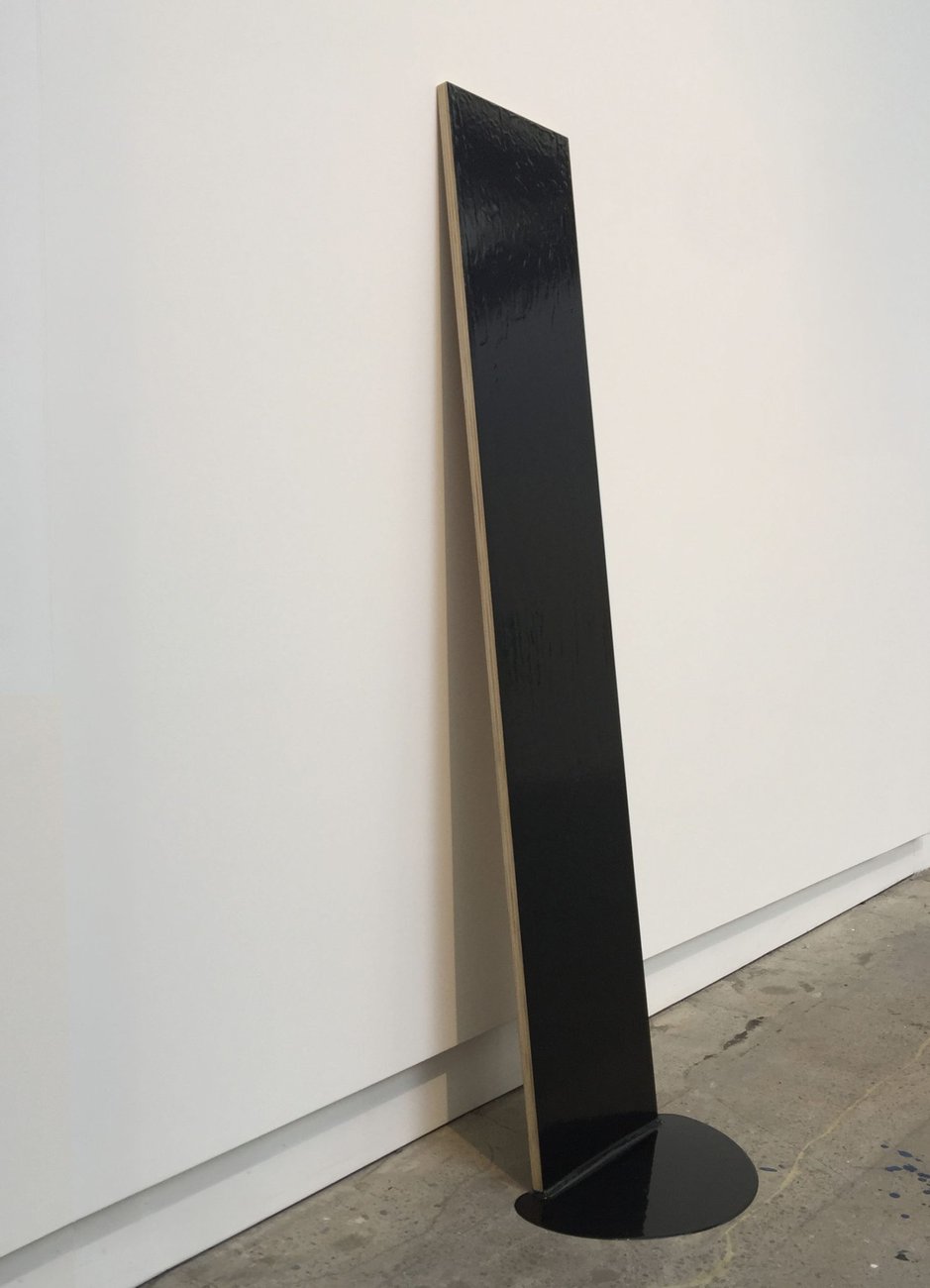
This is a witty show of carefully chosen ‘old’ works, many of which have an internal play of opposing action-referencing time periods sequentially separated. Of the nine contributions (some paired panels), many didn’t get the critical attention they deserve first time round.
Presented one before the other during the process of production, the underpinning components of the more complex works surprisingly reference the protocols of grammar-use (its classification) as parallels to stages in art methods that also state an exaltation of the past.
Yet it is fun without being too academic, showing sensual materials tied to specific chronological slots for paint application. In other words, this intriguing, conceptually rich, exhibition is about sequencing, the process of organising a series of (usually) manually guided studio events to make art.
Celebrating the preplanned necessary stages and presenting diverse practices, the show alludes to nostalgia while also deliberately avoiding recently made work by not looking at the latest painting history, and only acknowledging its earlier achievements.
Of course, one wonders where does the aspired previous perfection of its title (with its nice hinted-at twist) really reside—if at all? Can it also be in the present and even the future? Or is it as a concept too clever to be worthy of treating its ideas seriously…one that ends up overstating the obvious?
Selecting previously displayed works is one thing, but the question remains about the nature of the materiality in relation to the title’s interest in sequence and duration.
If one ponders an imaginary sentence around these works, like say, this one about Noel Ivanoff’s mono-printing method of paint application in 1999, that might go: the paint had dried on the sheet of drafting film before the artist decided to take the stretcher and… then the purpose of these words and their emphasis in regards to the elasticity of time becomes more apparent. We see the insertion and function.
John Hurrell
 Advertising in this column
 Two Rooms presents a program of residencies and projects
This Discussion has 0 comments.
Comment
Participate
Register to Participate.
Sign in
Sign in to an existing account.