




John Hurrell – 17 December, 2010
Sometimes pinions are used instead, flexible batons or screwed together pieces of timber that are jammed in to press objects tightly against each other or the ceiling. This method is mixed with the pulley system so that the ‘earth' globe and its attached hooks is an ingredient too, a symbol perhaps for the land beyond the local, the space extending to infinity outside Te Tuhi's windows.
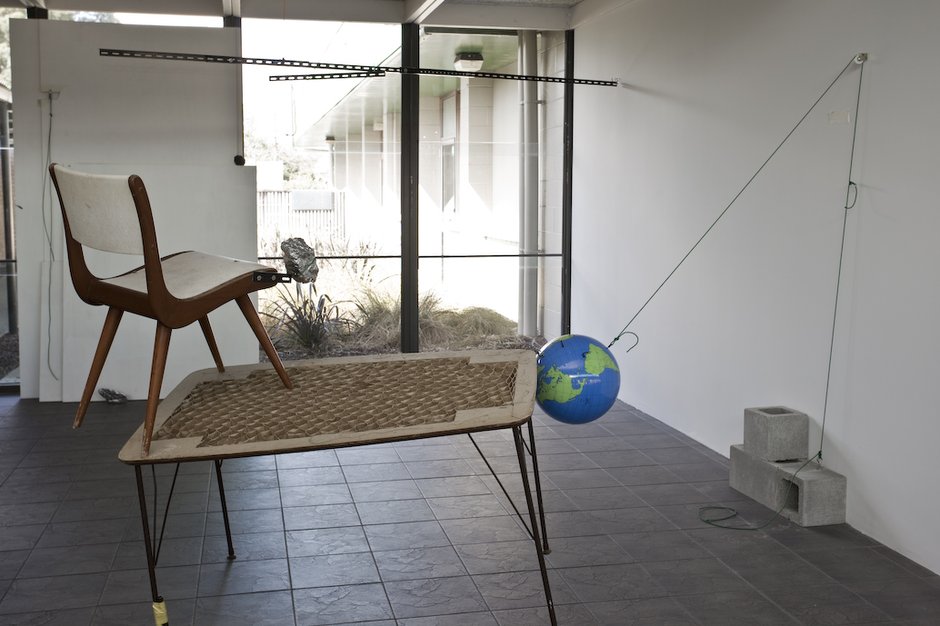
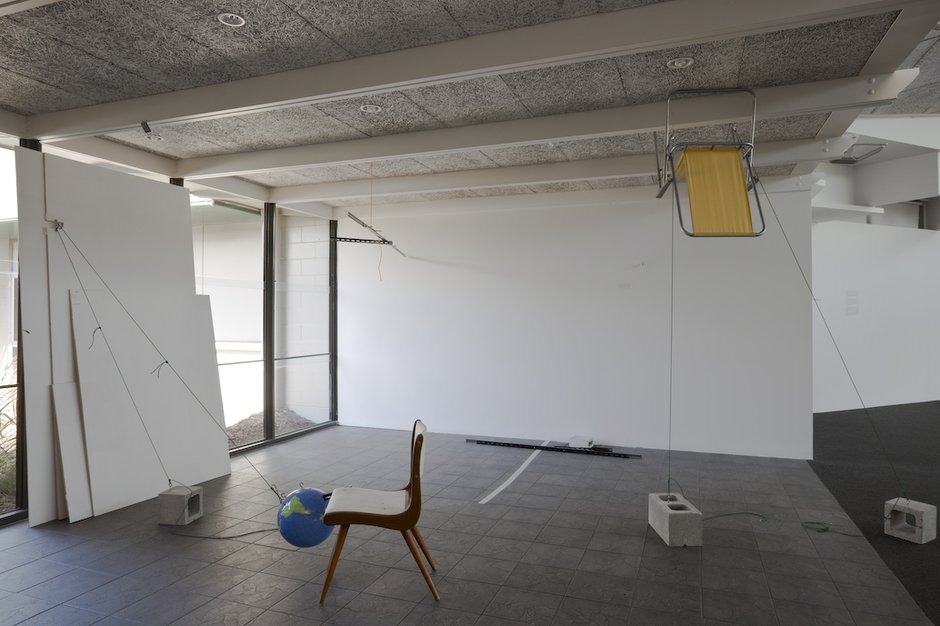
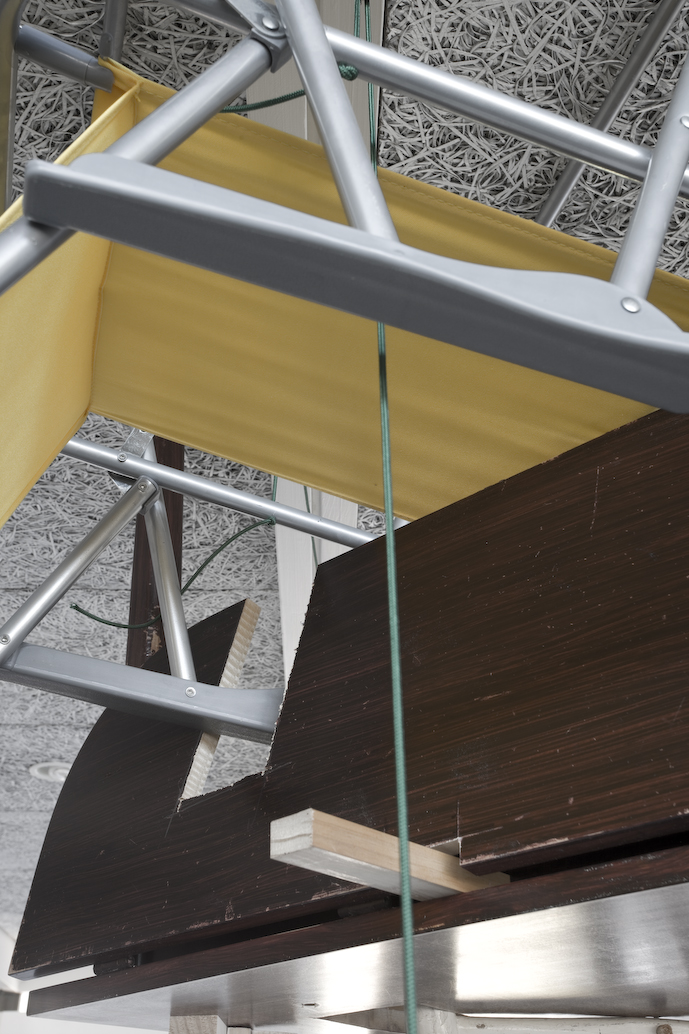
In this four stage project Te Tuhi’s drawing wall is used as a backdrop for a drawing space in which Paul Cullen uses furniture and a globe of the earth as elements to suspend in the air: a means of activating the viewer’s vision, so they consider the general physical laws that hold these things in place, and ponder the intervening mechanical details of the artist’s manipulation.
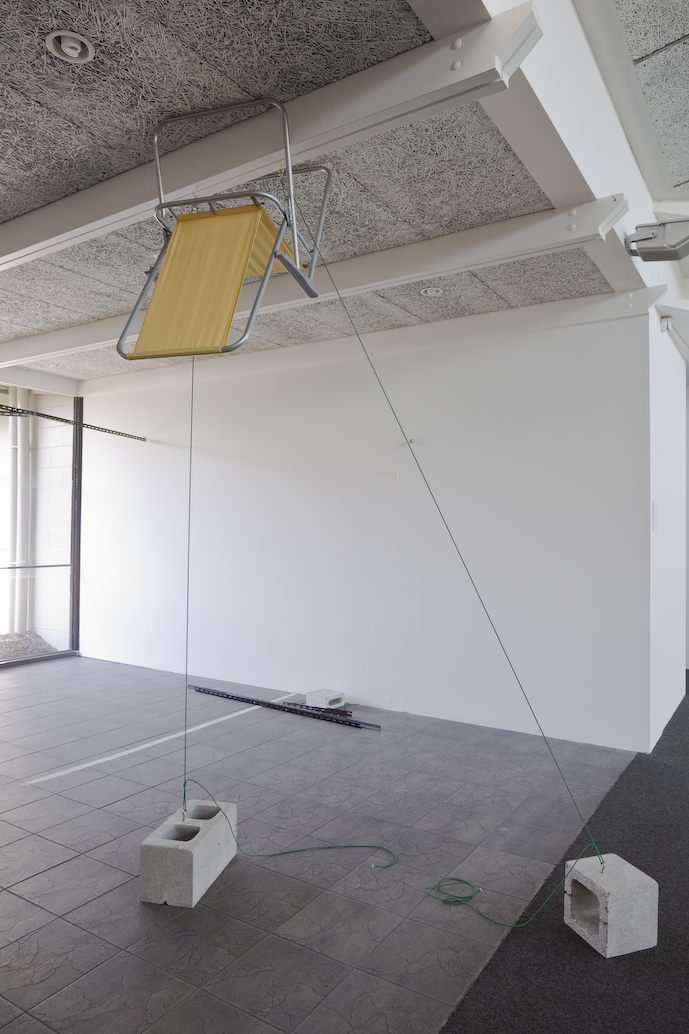
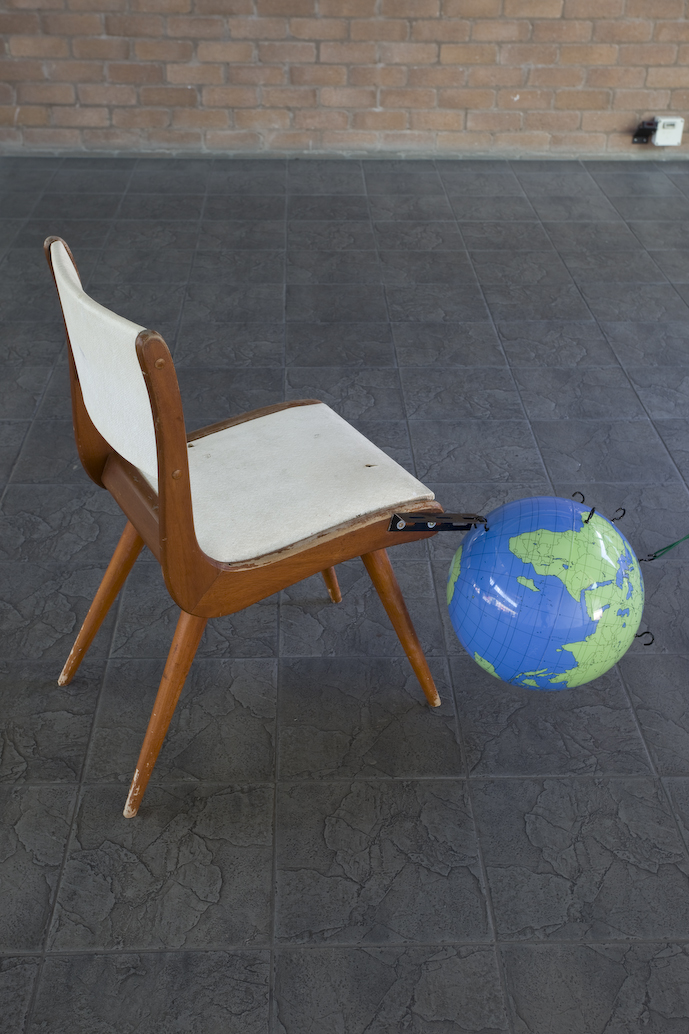
Cullen delights in dismembering everyday objects used for resting or holding the body and attendent articles, peeling back or cutting holes through their layers or supports in order to make units hover next to (or penetrate through) each other. Subsequently the different tables, chairs, globe and metal shelving struts are held in check by lines of thin cord threaded through pullies on the ceiling or wall and attached to concrete block counterweights. These green lines, blocks and fulcrums sustain their positions.
Sometimes pinions are used instead, flexible batons or screwed together pieces of timber that are jammed in to press objects tightly against each other, the ceiling or a base of plywood sheets. This method and actual screwing is intertwined with the pulley system, while the ‘earth’ globe and its attached hooks is an ingredient too, a symbol perhaps for the land beyond the local, the space extending to infinity outside Te Tuhi’s windows.
What may seem an act of vandalism or disrespect to these elements is really an act of love. There is tenderness in the work’s fastidiously casual appearance, its details of superficially ‘thrown together’ (but actually tightly interlocking) ingredients. The artist delights in these pieces of worn out and abandoned furniture and the planetary ball - things he can take and imbue with new life, interacting with each other and the particularities of the exhibiting space they are placed in.
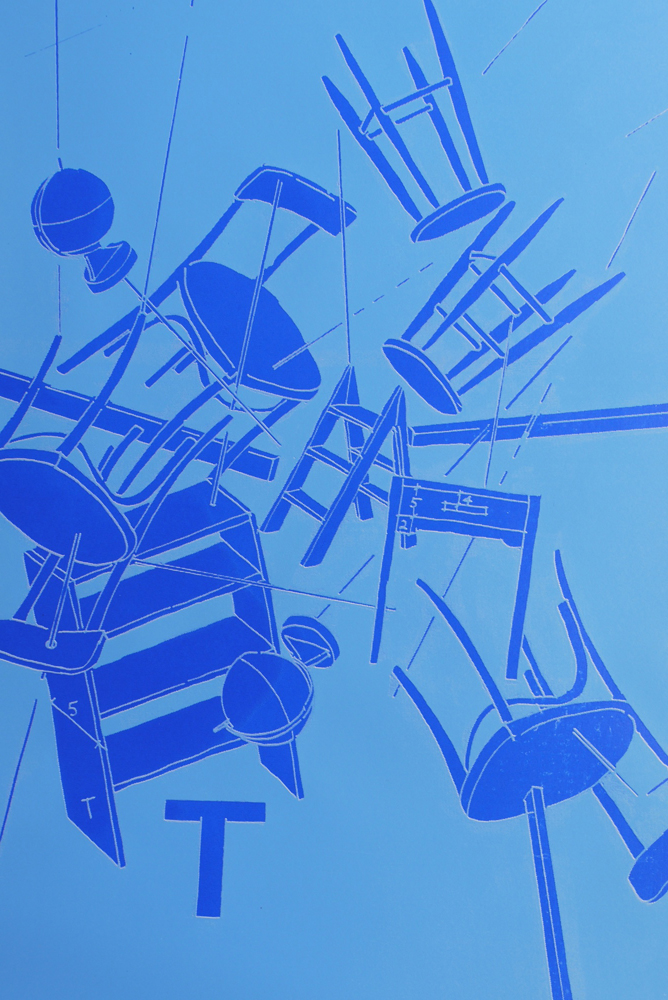
As if to remind us of the peculiarities of each installation, Cullen is about to present some screen prints at Split/Fountain, showing his silhouetted components floating in a field of blue. In these prints they are not in a room, building or country, but in the sky as if Platonic symbols - like something from a Brent Wong painting. Cullen’s ‘wild blue yonder’ though (and only one of the small group is blue) might be a space even further out, within a more distant imaginative location, beyond even that of Art itself.
John Hurrell
 Advertising in this column
 Two Rooms presents a program of residencies and projects
This Discussion has 0 comments.
Comment
Participate
Register to Participate.
Sign in
Sign in to an existing account.