



John Hurrell – 16 April, 2011
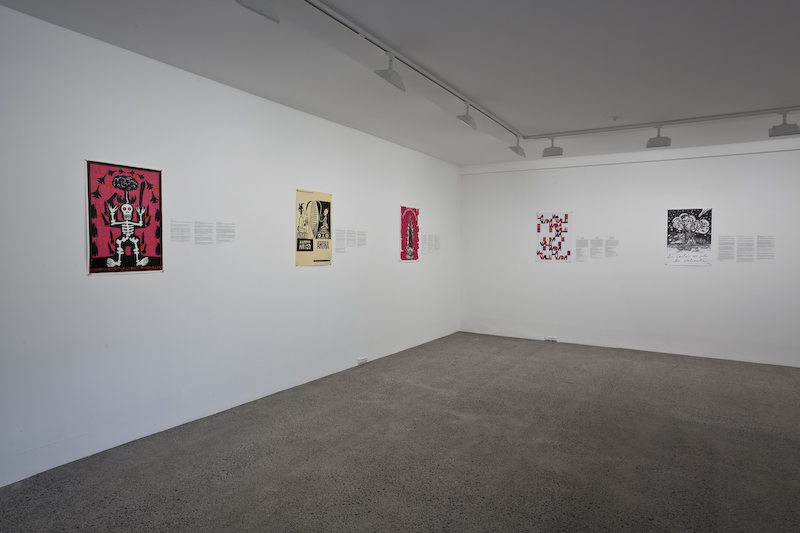
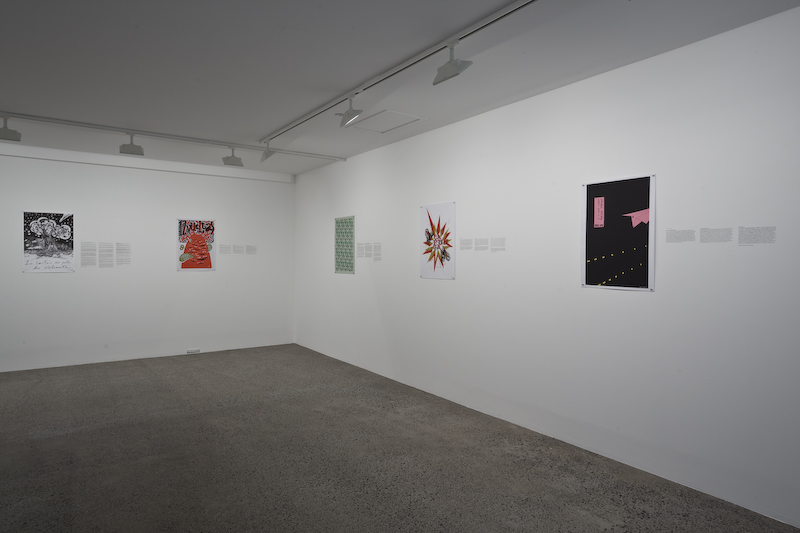
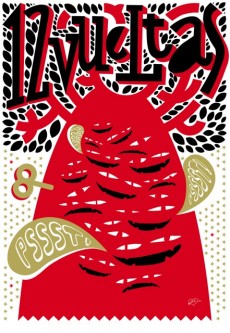
This touring show of posters from Cuba, Mexico, and Aotearoa showcases the power of indigenous or migrant story-telling through the work of eleven artists. Many of the dozen posters are motivated by activist causes, some are more to do with colonial history or traditional folklore, others the pleasures of contemporary storytelling. It is a rich mix.
Auckland
International Poster Exhibition
Pūrākau
Curated by Xavier Meade and Flor de Lis López
5 March 2011 - 1 May 2011
Pūrākau is the Māori word for narratives that get verbally passed on communicating valuable truths, myths and histories bound tightly within a community’s identity. This elegantly presented touring show of posters from Cuba, Mexico, and Aotearoa showcases the power of indigenous or migrant story-telling through the work of eleven artists - some of them graphic designers, but not all. Many of the dozen posters are motivated by activist causes, some are more to do with colonial history or traditional folklore, others the pleasures of contemporary storytelling. It is a rich mix.
So much so that it pays to get the show’s catalogue on an initial visit, read the lively discussions after you’ve had a good look at the imagery, and then return for another look so that you can pick up on specific references in more detail. This good looking, very informative publication is designed by Warren Olds, with multi-lingual (English, Māori, Spanish) commentaries not only by the artists on their posters (with reproductions) but also extra mini-essays with curatorial explanations by Danny Butt, Jon Bywater and others. These help draw out some of the characteristics of the three participating countries - as well as providing interconnecting threads.
There are several types of image group. The Cuban works tend to focus on stories about people interacting with vegetation: a slave who harvesting fruit climbs, then falls, from a palm (Giselle Monzón Calero), those making wishes by running round trees with magical properties (Eric Silva Bley), or a neglectful mother and her six crying children being transformed into poisonous bushes (Michele Miyares Hollands).
The poster by Natalie Robertson deals with social and ornithological history. It references the demise of the huia in the first decade of the twentieth century and how that process was accelerated by the gift of a huia feather by a Rotorua chief to the visiting Duke of York, who placed it in his bowler hat. The resulting international publicity made such feathers a popular high priced fashion accessory. The last living huia was seen in 1907.
Carlos PeZ’s poster also looks at a historical event. Its title (To be Cortes does not prevent one from being courageous...) surprisingly acknowledges the bravery of the greedy but desperate Spanish troops led by Cortés. When in June 1520 they tried to flee Tenochtitlan and Moctezuma’s angry warriors loaded up with booty, many ended up falling into and drowning in Lake Texcoco.
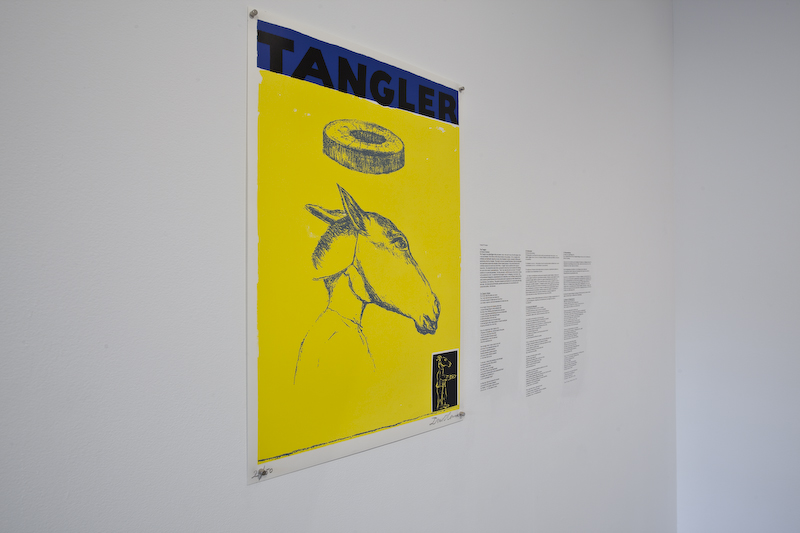
Denis O’Connor’s contribution features a paradoxical character from an Irish folktale his father told him about. The Tangler is a skilled negotiator /trickster adept at facilitating the sale of horses, but also - as shown in the poster - part the desired horse himself, and as such skilled at disentangling any metaphorical knot in any animal’s tail.
Other posters feature images based on idiomatic language, expressions referencing those who suddenly leave as migrants for foreign countries like disappearing balloonists (Claudio Sotolongo), or depict the lettered words of songs expressing Mexican nihilism, such as ‘Life is worth nothing’ (Arturo Meade).
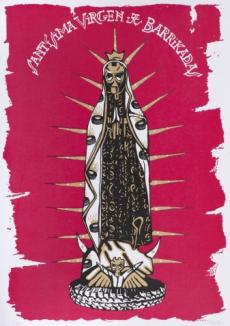
There are of course a lot of overtly political posters here (Michael Reed, Xavier Meade, Yescka [ASARO]) attacking the continued vestiges of colonialism, greedy and wasteful consumption of natural resources and mounting stockpiles of weapons. Festivals featuring images of skulls and skeletons (and Madonnas too) as seen here are an established national tradition in Mexico and other countries, and these posters are easy to understand. They are designed to communicate quickly.
Danny Butt in part of his essay mentions the question of whether it is apt for these images to be in art galleries and not on the fences and buildings of cities in the countries they were designed for. Yet even though by touring in galleries they become chic commodities, their anger and urgency muffled, their compromising ‘art’ status does help get them seen by other ‘non-street’ audiences and their messages broadcast.
This complex yet accessible show presents more ways of thinking about reproducible ‘selling’ images than is readily apparent. It challenges conventions about poster subject matter, questioning assumptions about content by providing a number of feasible approaches to the ‘street.’ A forceful but nuanced suite.
Today being Saturday, there is a free bus out to Te Tuhi’s new batch of openings, leaving ARTSPACE at 1.30 pm. A good chance to investigate Pūrākau while you are there.
John Hurrell
 Advertising in this column
 Two Rooms presents a program of residencies and projects
This Discussion has 0 comments.
Comment
Participate
Register to Participate.
Sign in
Sign in to an existing account.