


John Hurrell – 25 January, 2013
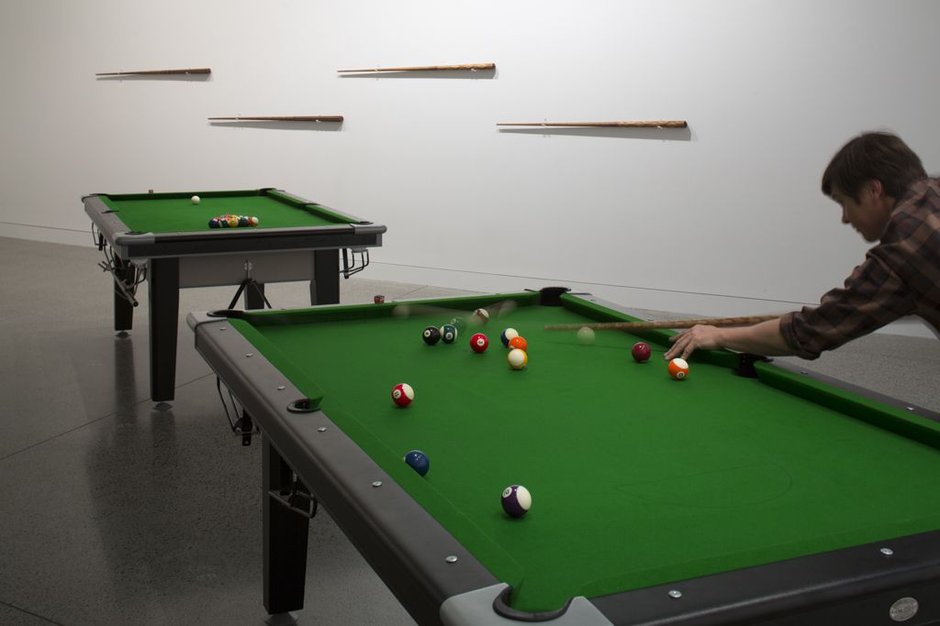
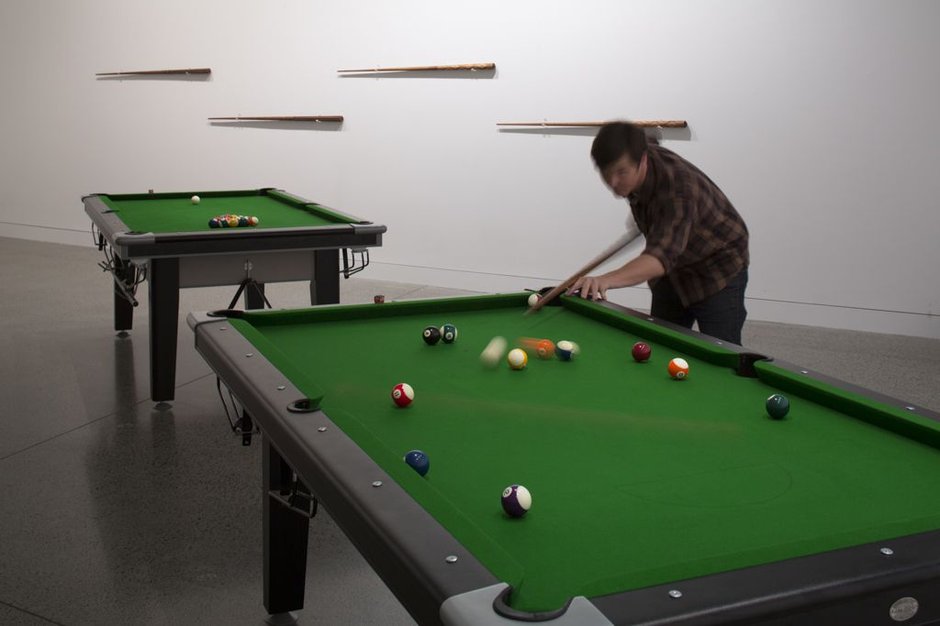
Hollis and Urale have made a very nice looking installation but it is only really complete as an exhibition when at least one pool table is being used. Looking at it as a static sculpture with moving video somehow misses the point. It is a successful kinetic and aural sculpture only when the tables attract activity and when the cues are in people's hands being admired, discussed and used competitively.
Auckland
Rangituhia Hollis & Vaimaila Urale
Mata Mata
24 November 2012 - 7 February 2013
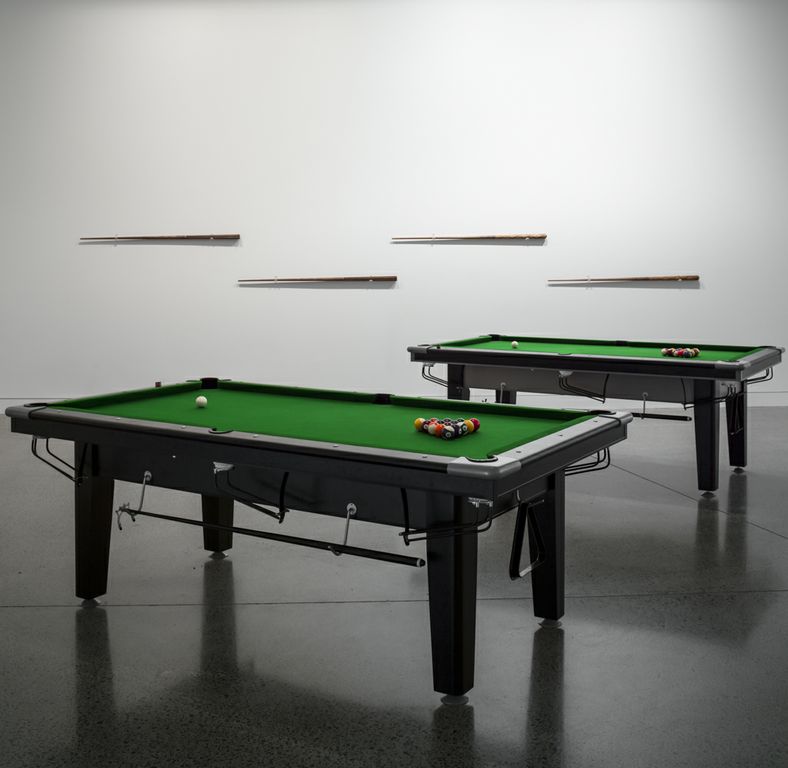
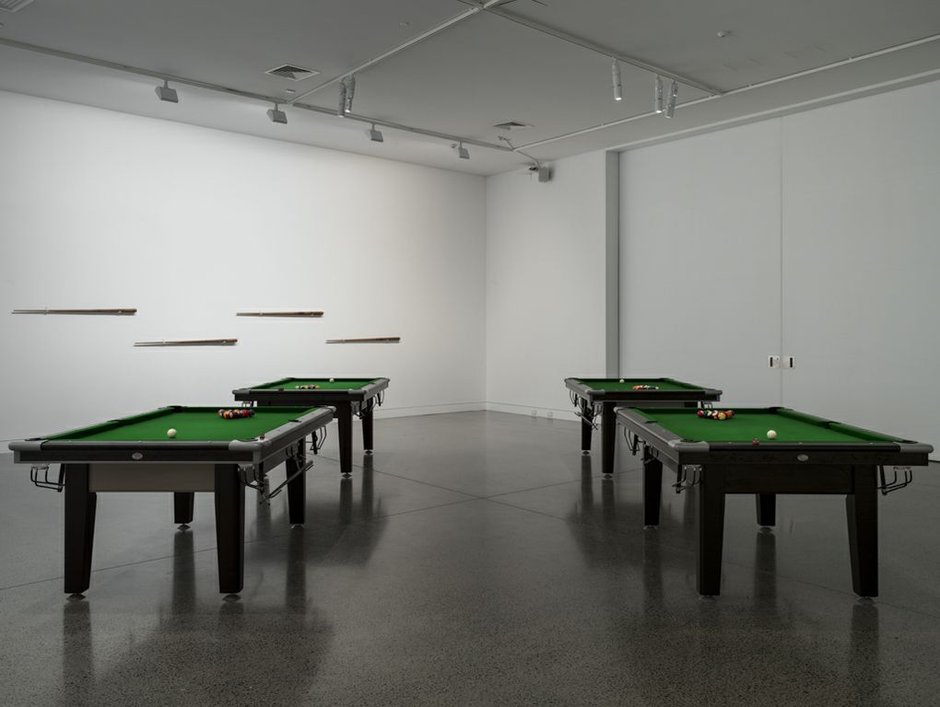
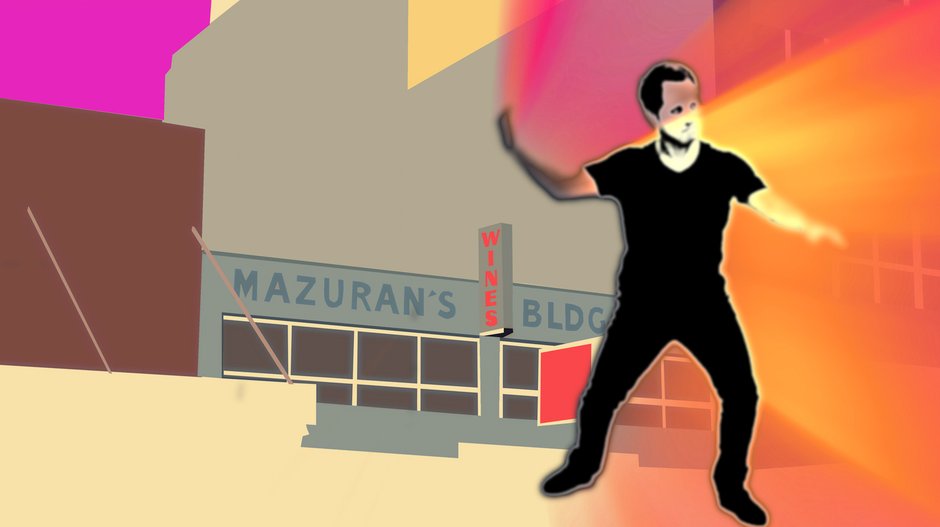
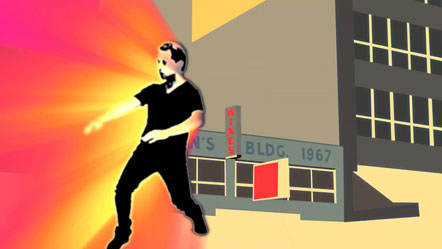
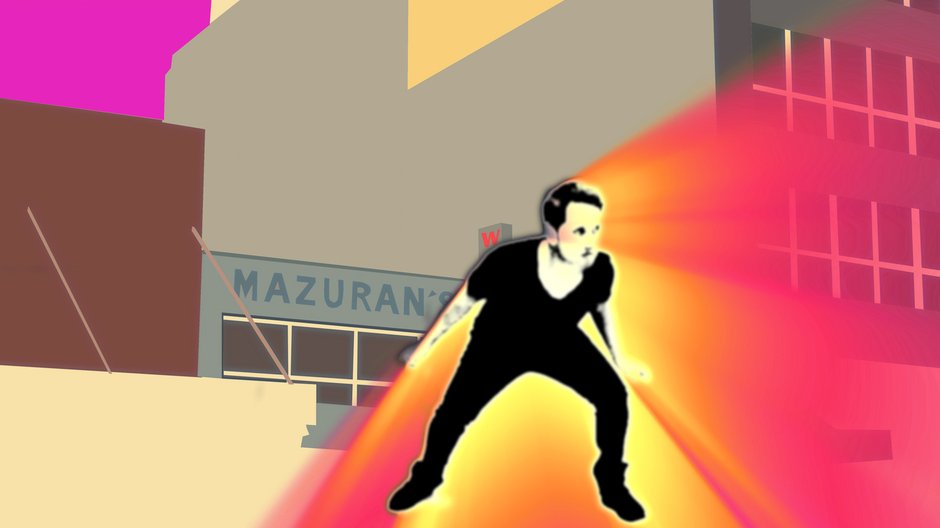
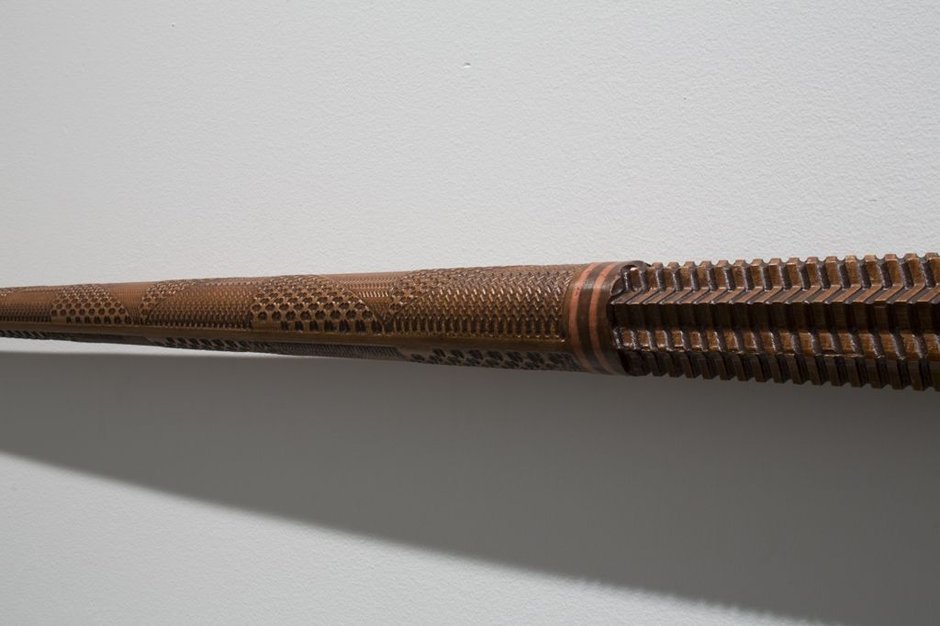
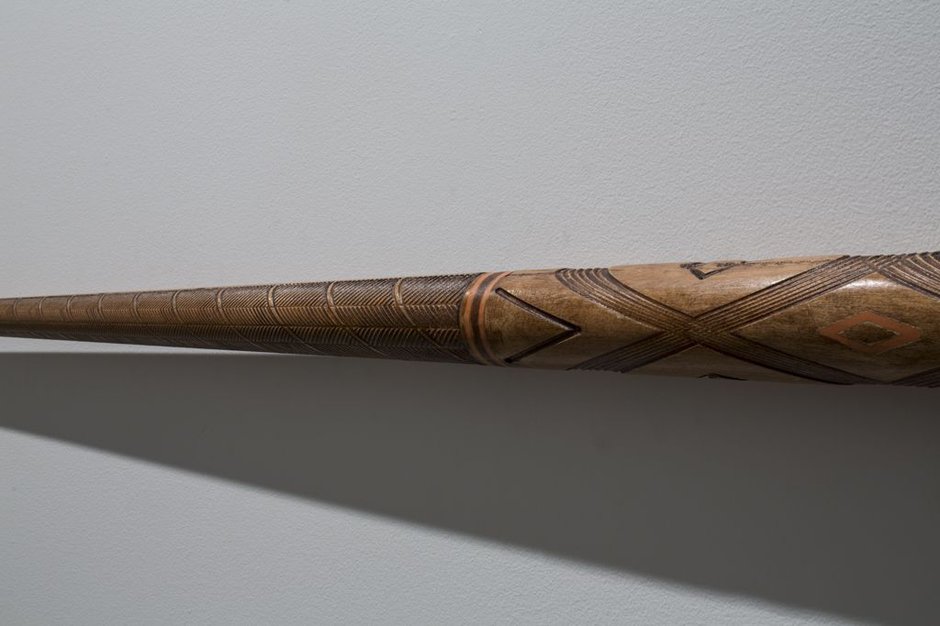
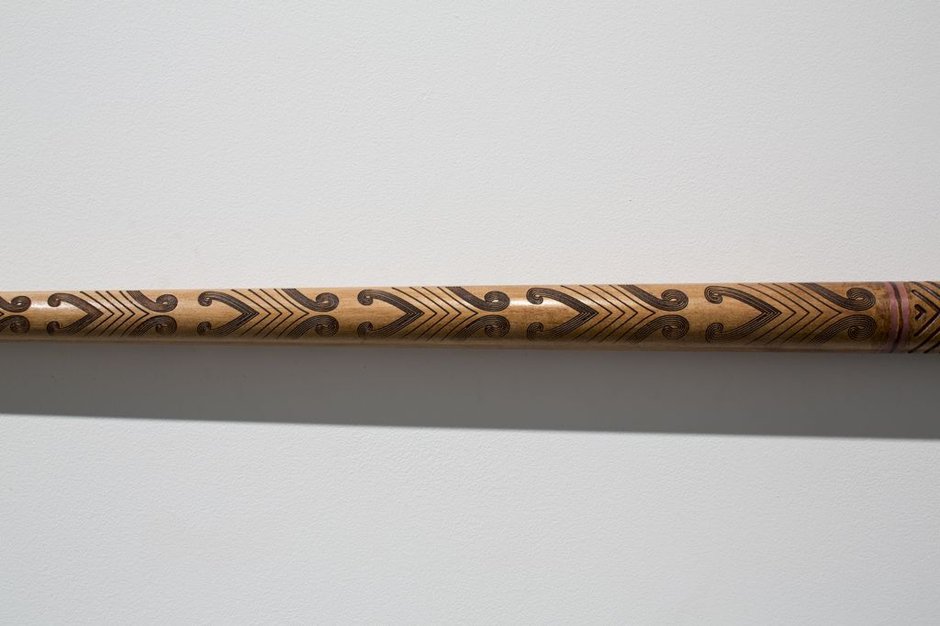
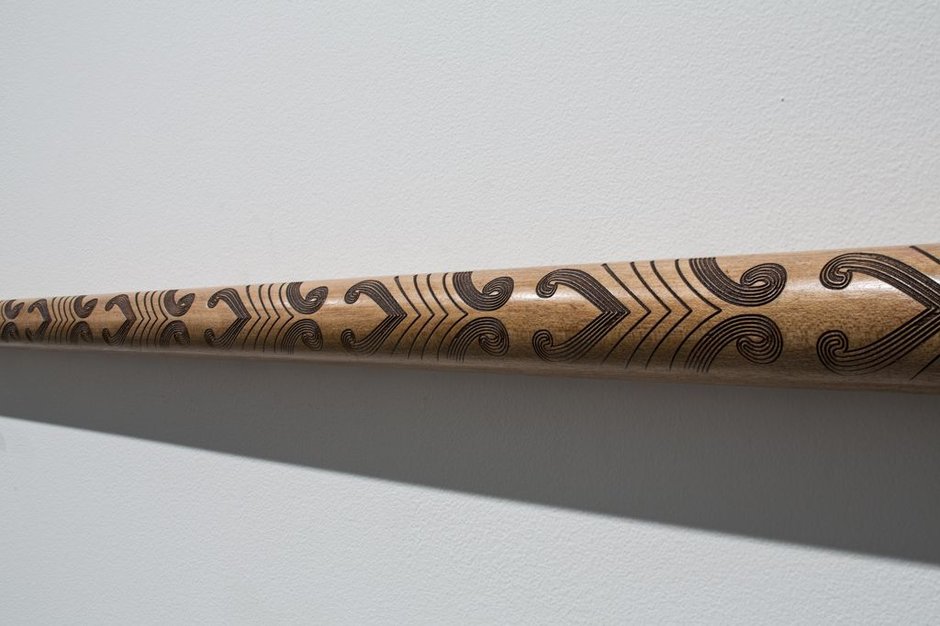
In this unusual exhibition by Rangituhia Hollis and Vaimaila Urale there are two sorts of component that initially seem quite unrelated. One is a video that becomes animated for a brief period after somebody approaches from one side of its electric eye, getting its staunch looking, burly security guard (standing in front of a bottle store) to nimbly break into dance or part of a ritual of challenge. The other is a set of four diagonally aligned pool tables and racked on the walls, eight intricately carved cues that at first glance might be weapons: long clubs or stabbing spears.
These billiard cues, which are there obviously to be used in paired off contests, with available boxes of balls and the green cushioned tables, have three sets of decorative motif each, all taken from weaponry, wrapped around their length, and carved or etched on with a computer programmed lathe. Some of these relief patterns are raised pyramids, zigzagging or diagonal formations, dots, and rows of korus. Their origins are Samoan and Maori, and demonstrate a fascinating Pacific synthesis that blends seamlessly into the English game that five hundred years ago grew as an indoors offshoot from the French croquet.
The video is maybe even more complex. The dancer is Jack Gray (from Atamira Dance Company) and with his unpredictable changes in speed and complexity his precise and agile movements are quite mesmerising. Some involve jerky, rapid poses (many alluding to the haka), others slow and fluid - mixed with crisp editing cuts. As he twists and turns his head and shoulders, beams of coloured light radiate out from behind his black clad form. And just as the cues are rich in cultural references so are the moves and ritual-based torso and arm positions of his dancer/warrior persona - over forty of them.
In fact an inventory of all the references found in the videoed segments and cue carvings might make good reading for any art historians interested, were such a list to be organised.
The aim of the project seems obvious - to introduce the gallery to a new younger Polynesian audience, and with that, develop their interest in Maori and Samoan culture - exploring their heritage and appreciating the venue as a resource to be enjoyed. So learning and recreation become inseparable.
Yet this is not a passive, coolly contemplative approach. Hollis and Urale have made a very nice looking installation but it is only really complete as an exhibition when at least one pool table is being used. Looking at it (Mata Mata means ‘face to face’ in Samoan) as a static sculpture with moving video somehow misses the point. It is a successful kinetic and aural sculpture only when the tables attract activity and when the cues are in people’s hands being admired, discussed and used competitively; when for instance the video dancer makes you think about the patterns quoted on the cues, and how he might hold the referenced weapons if they were to be incorporated. Or if he is really, instead, alluding to break dancing and its particular forms of backbending strutting showmanship.
This rich but subtle show requires visitor participation to get the art off the walls into people’s hands. All set up for you to visit with some friends and play some eight-ball.
John Hurrell
 Two Rooms presents a program of residencies and projects
 Advertising in this column
This Discussion has 0 comments.
Comment
Participate
Register to Participate.
Sign in
Sign in to an existing account.