
John Hurrell – 27 February, 2026
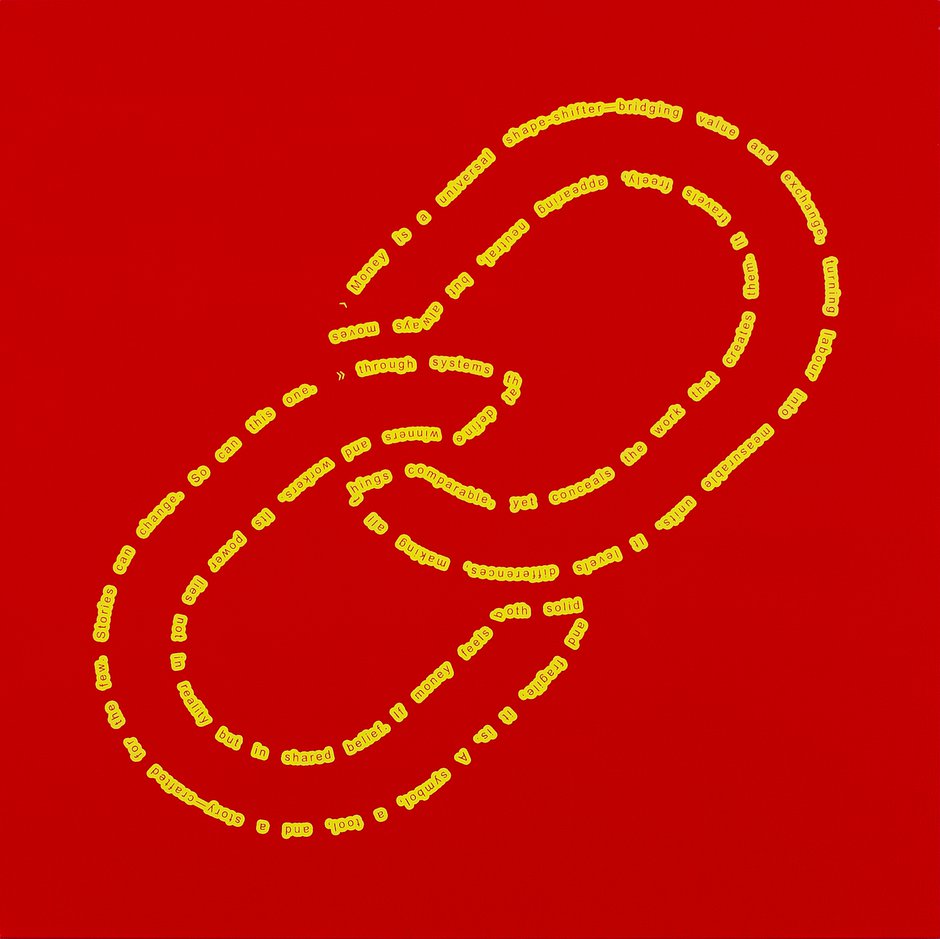
A multitude of nagging questions accompanies computer-reliant shows like this. You might search for signs (real or illusory) amidst the clinical ambience, of the ‘human touch' that brings intellect, warmth, likeability and humour; tricky though they may be to define. Animal or alien faces are rife, as are chain links, teetering boxes, copyright symbols and panopticons reveling in abstract symbolism.
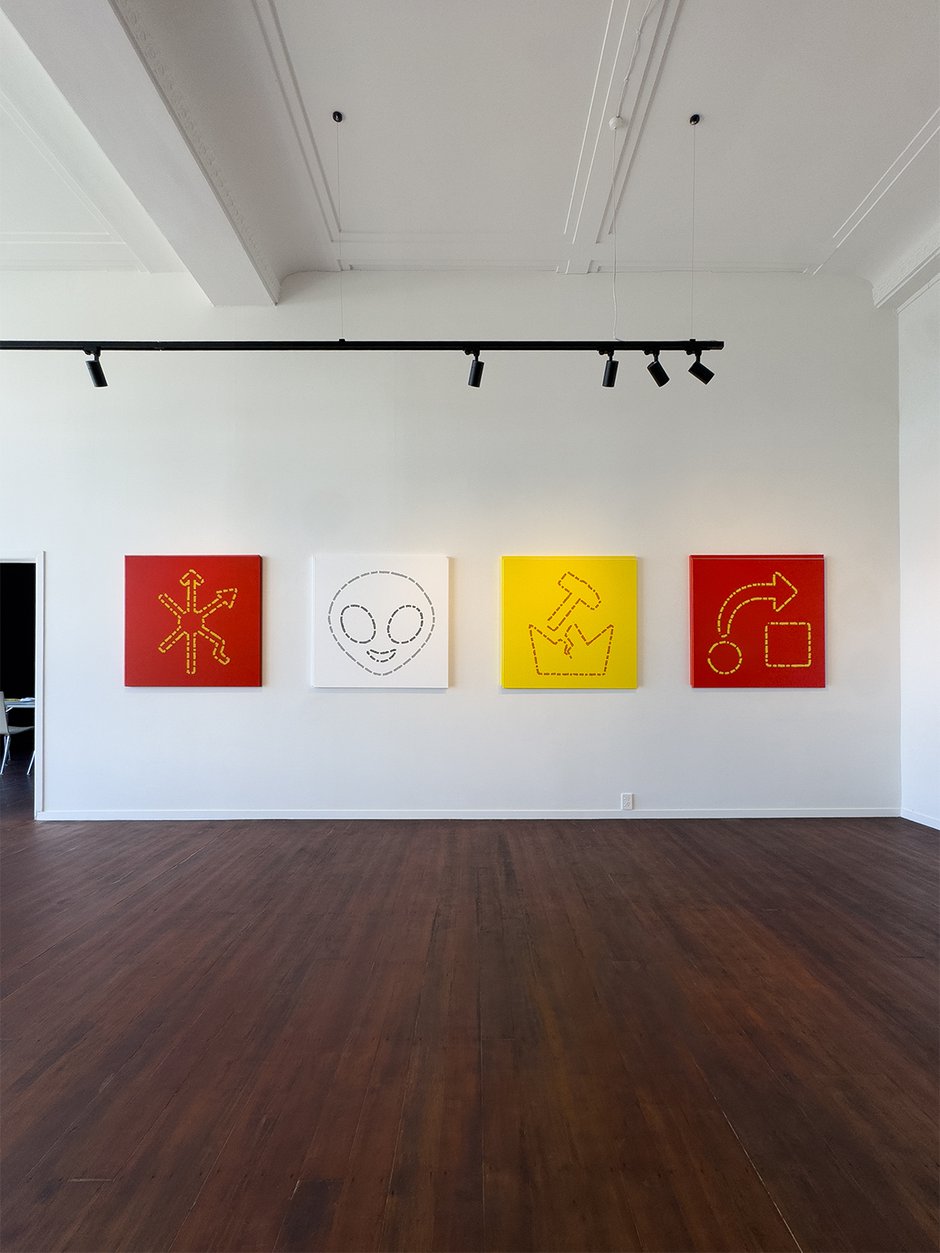
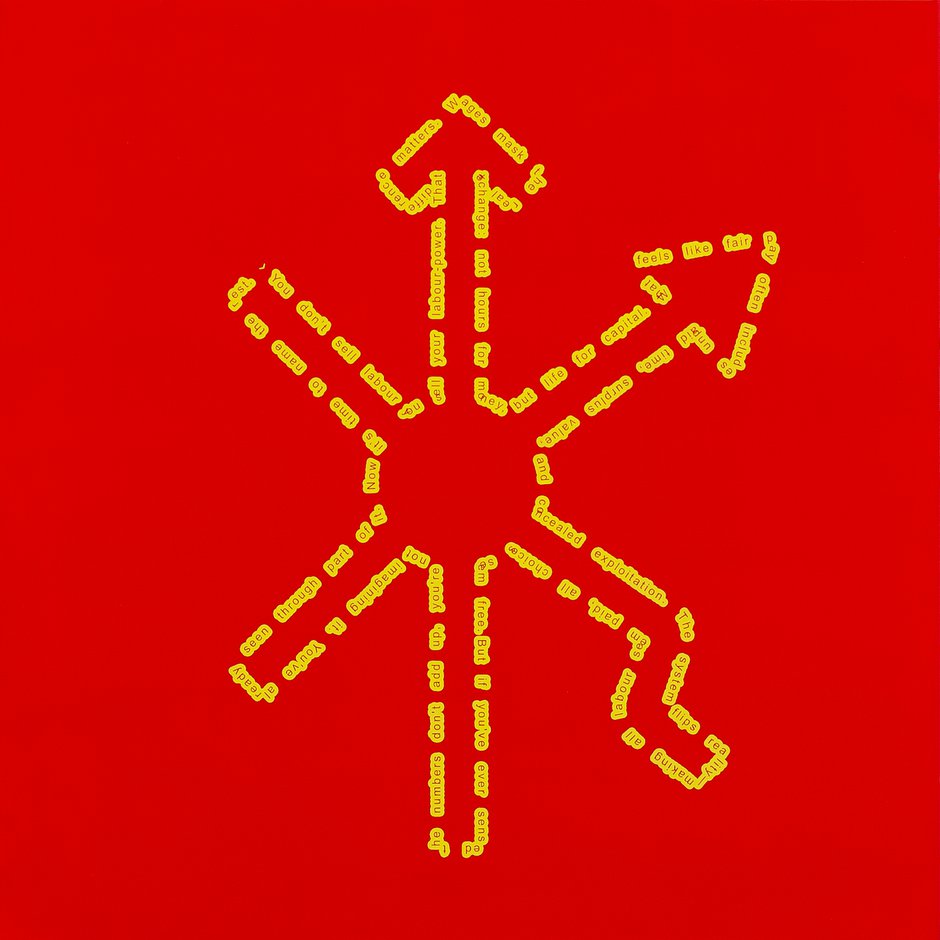
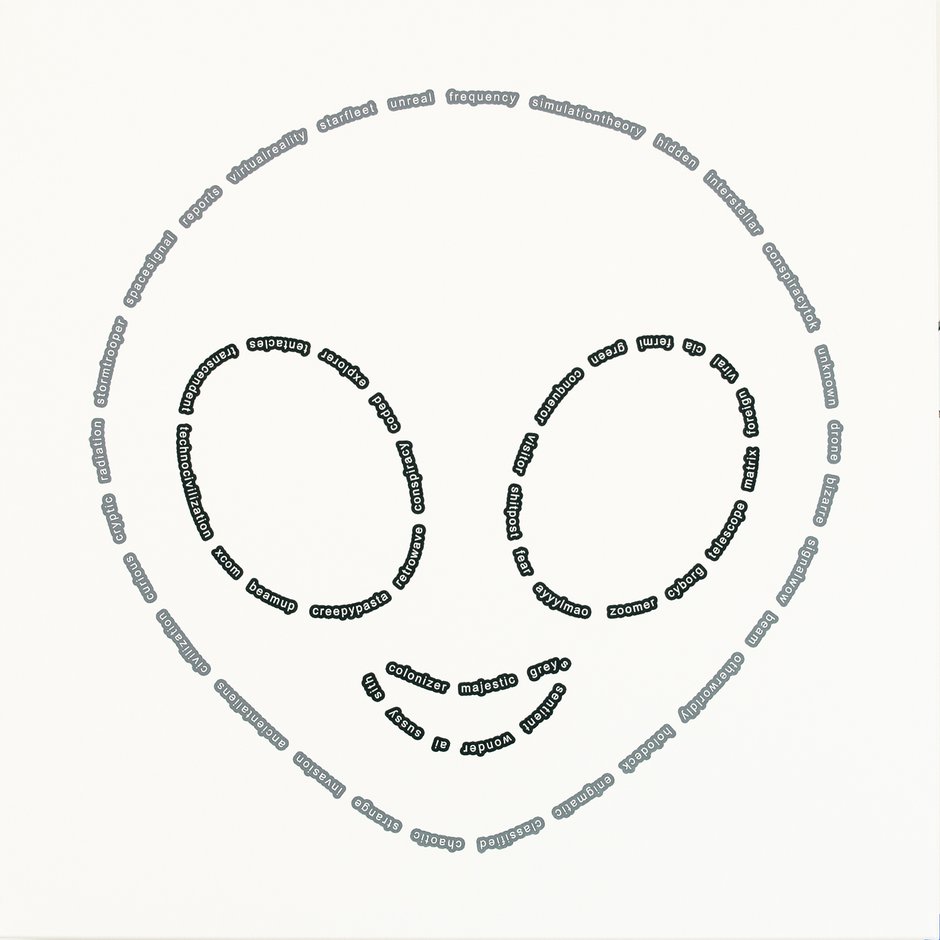
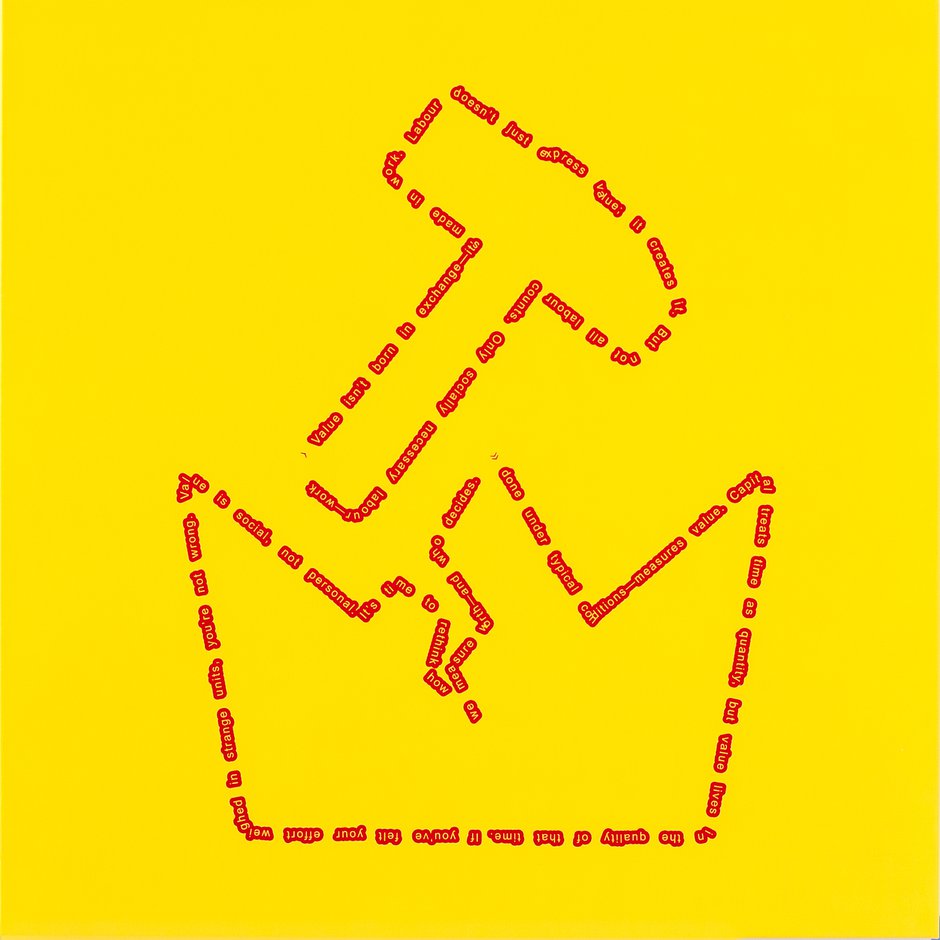
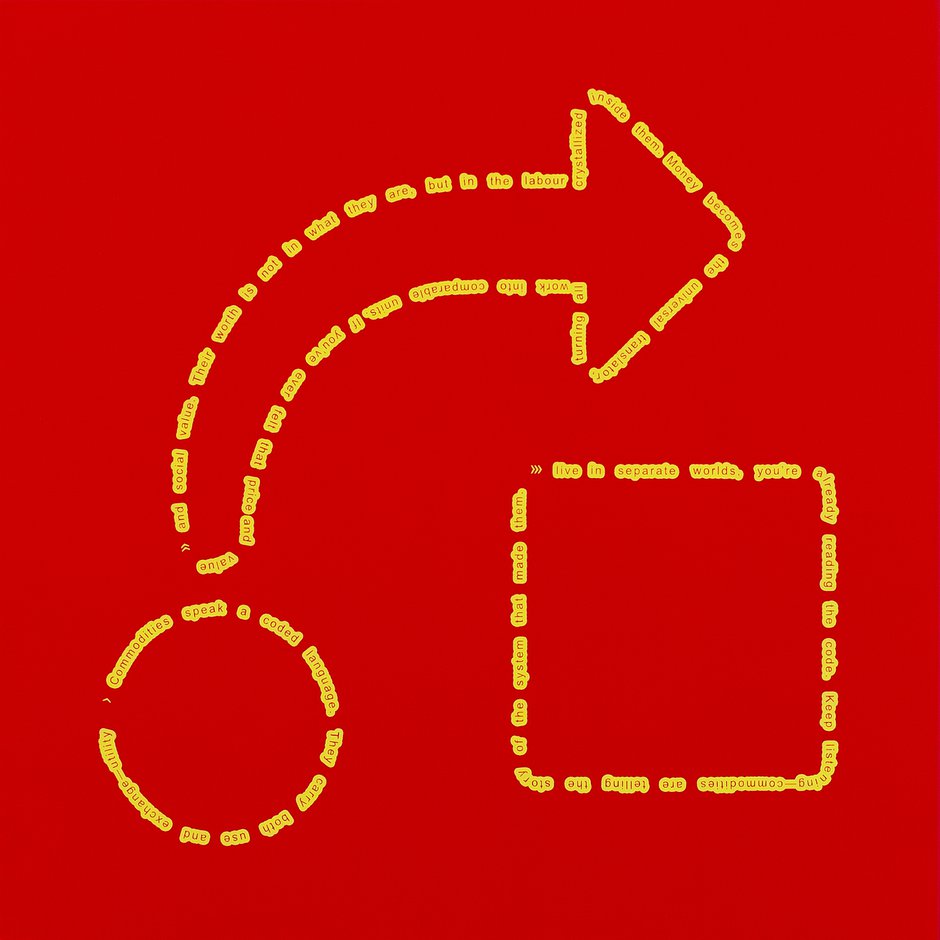
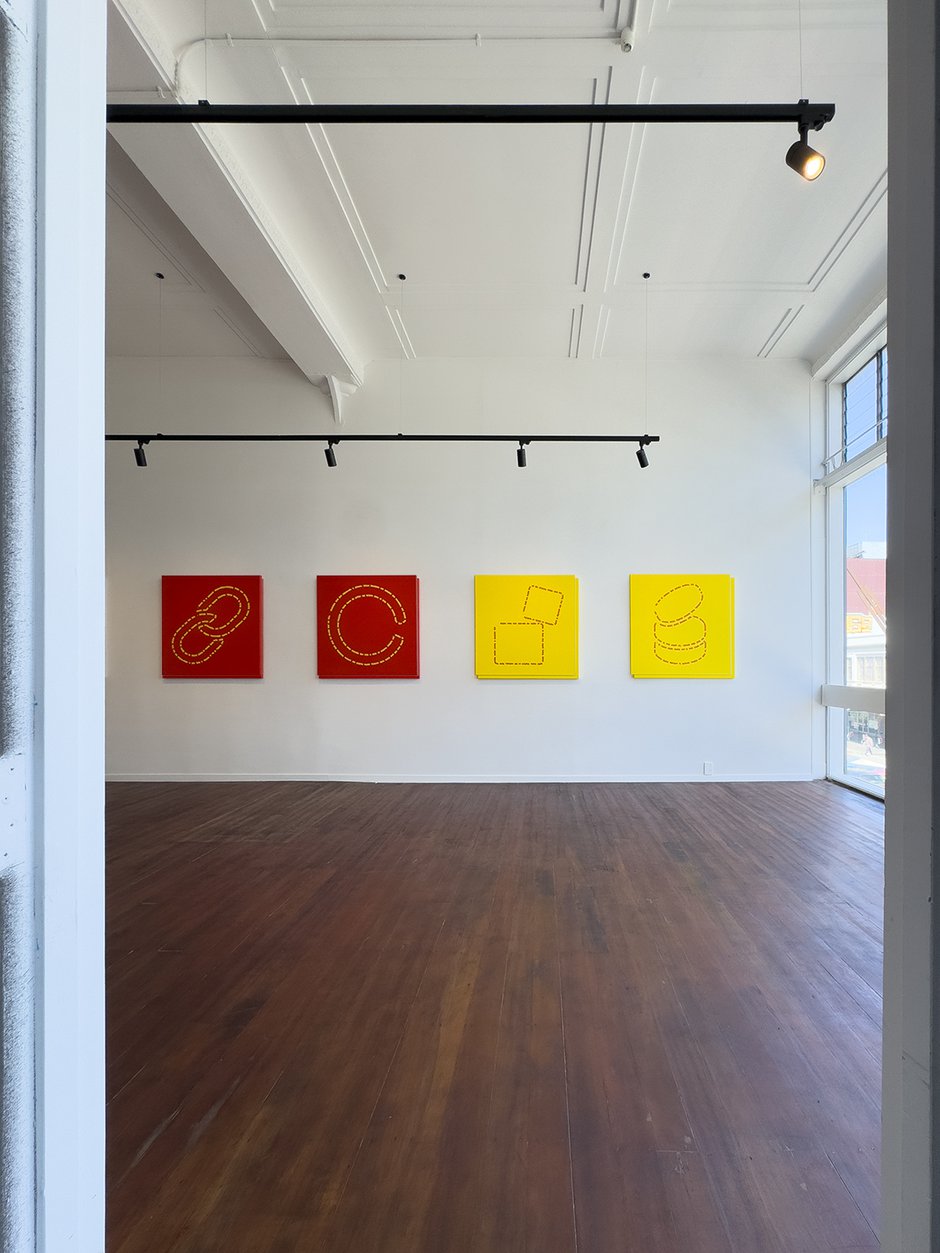
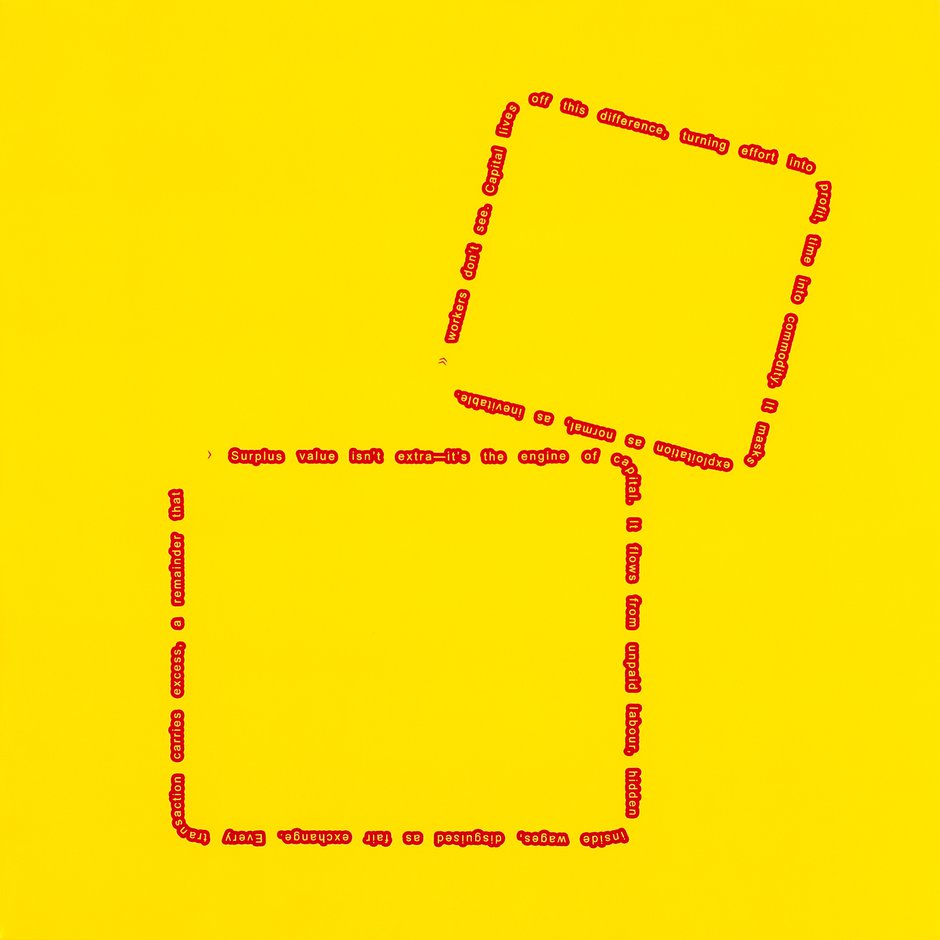
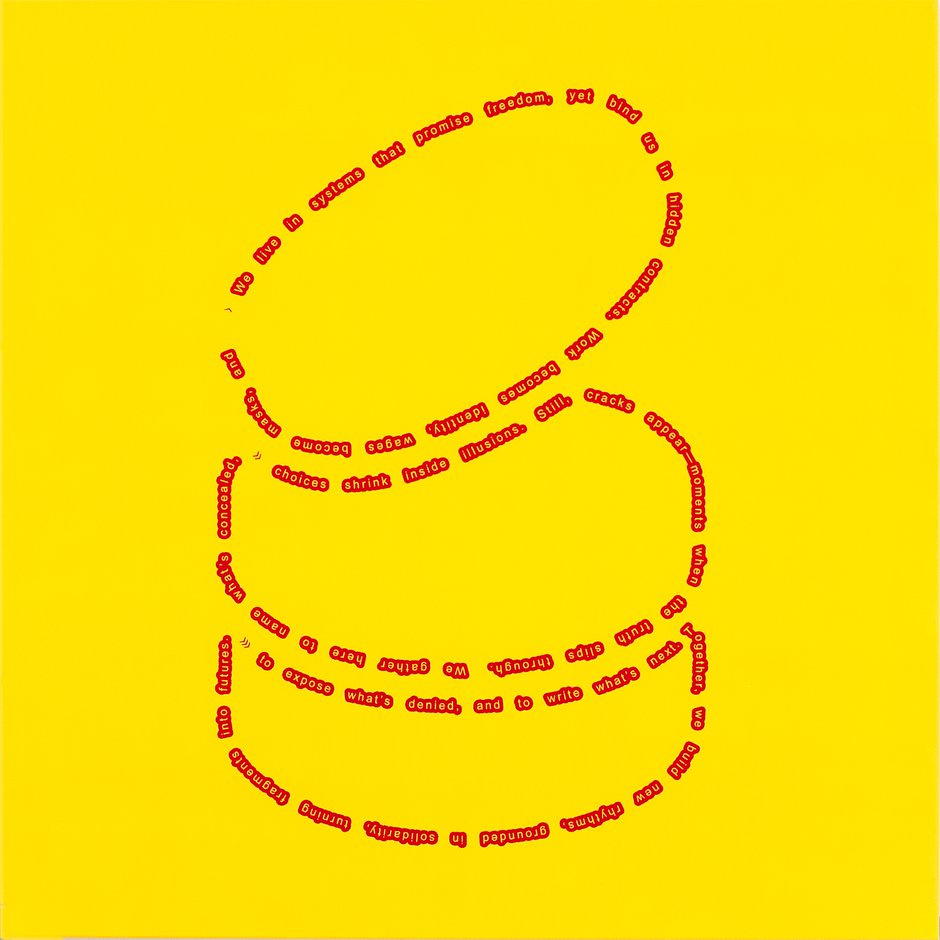
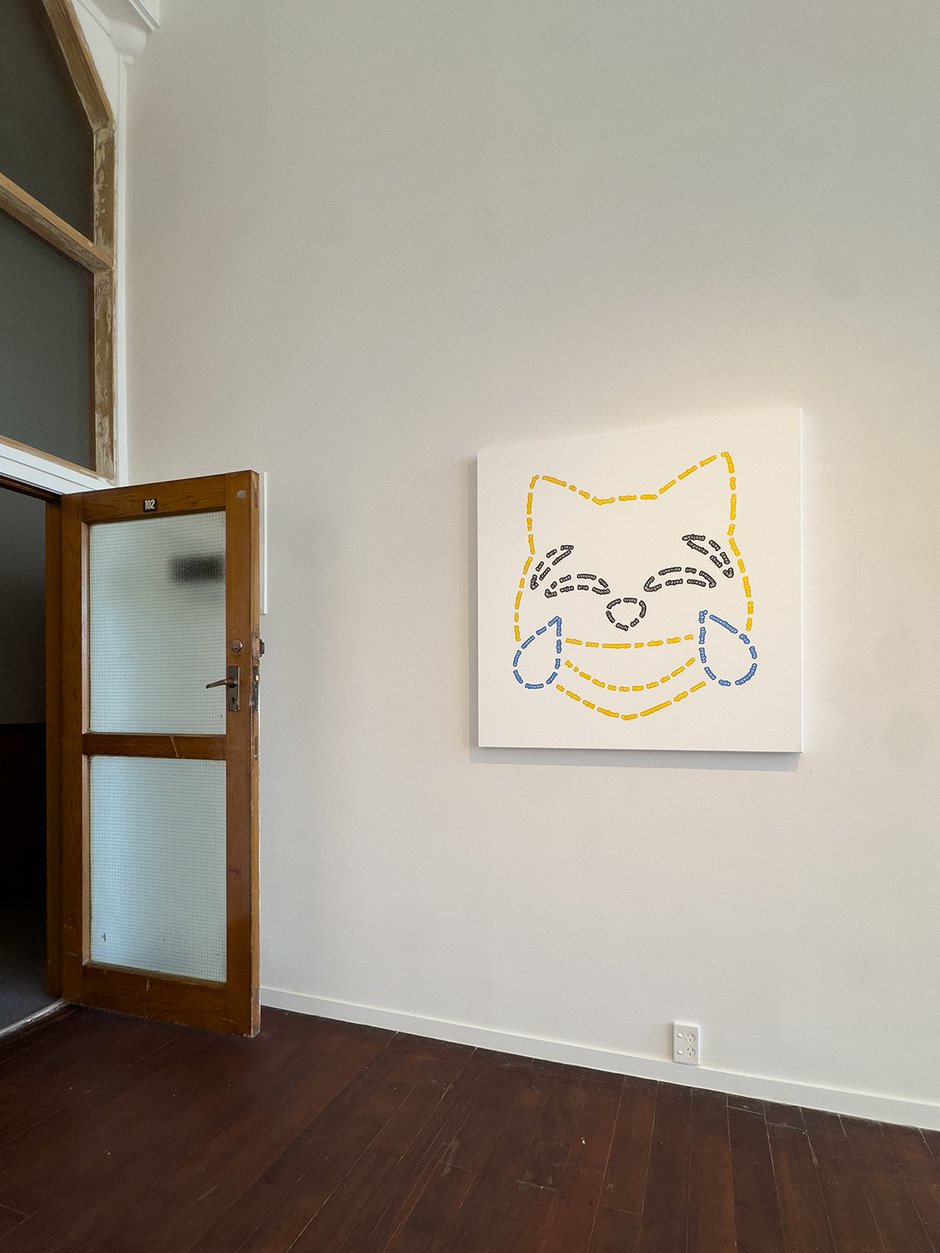
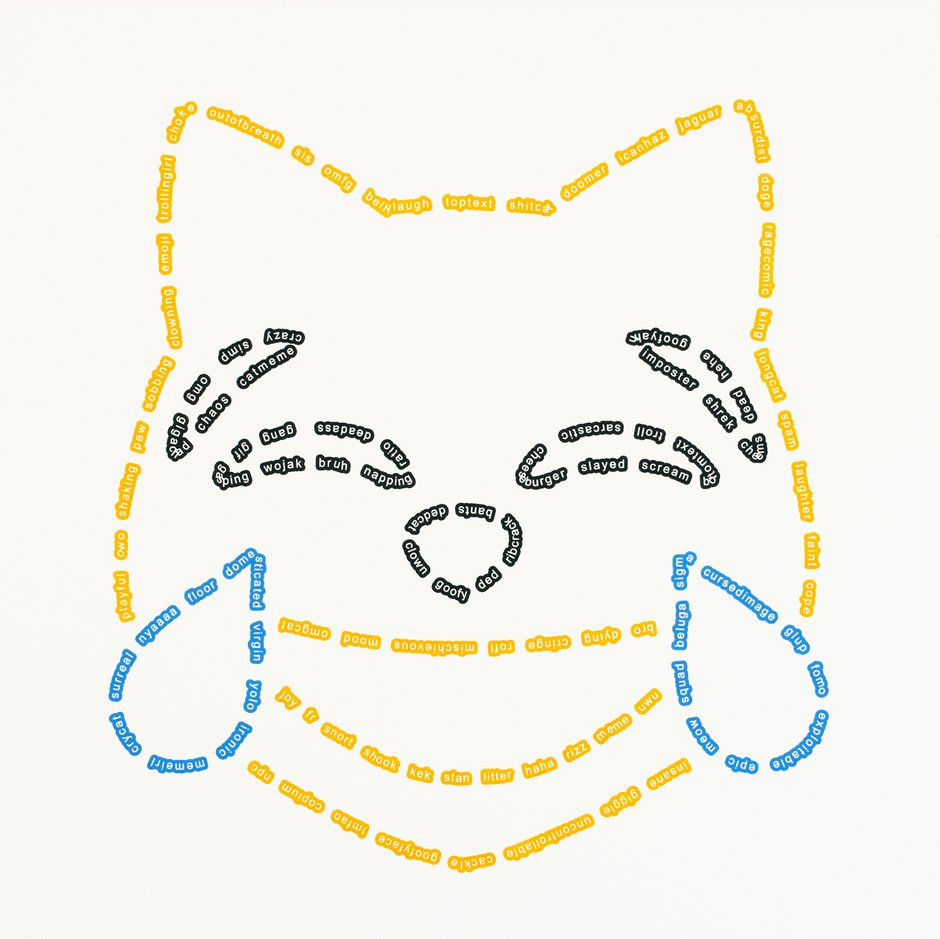
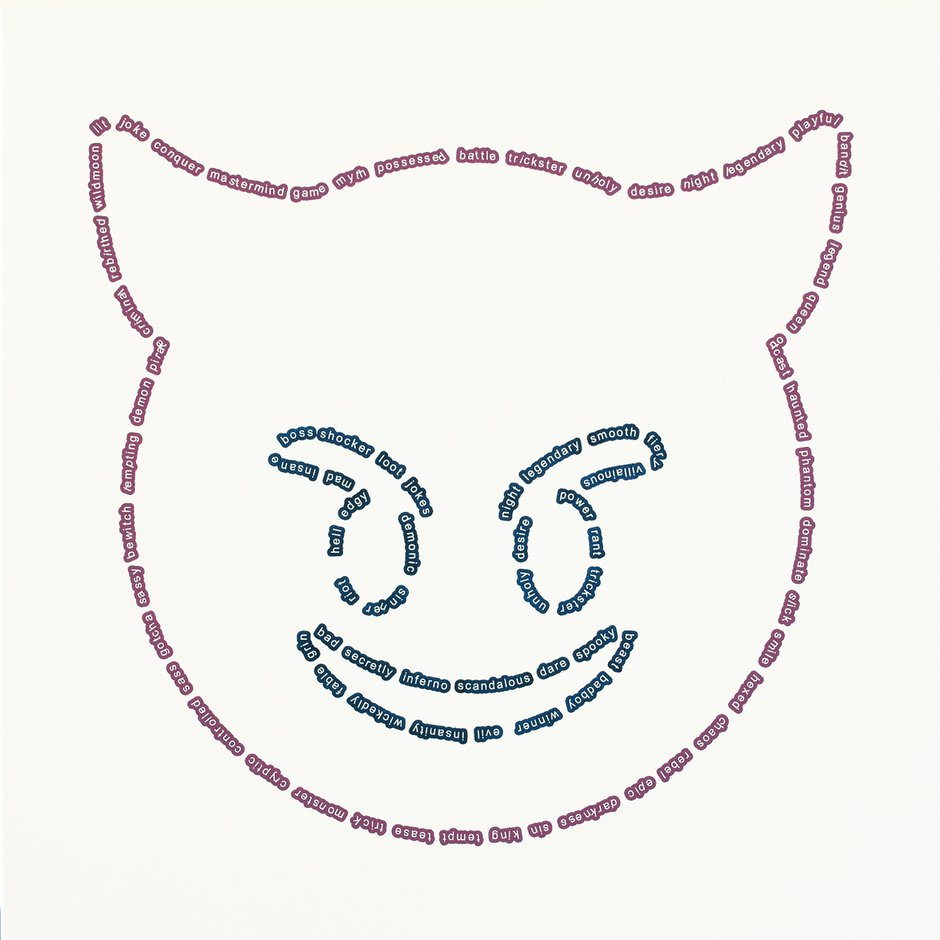
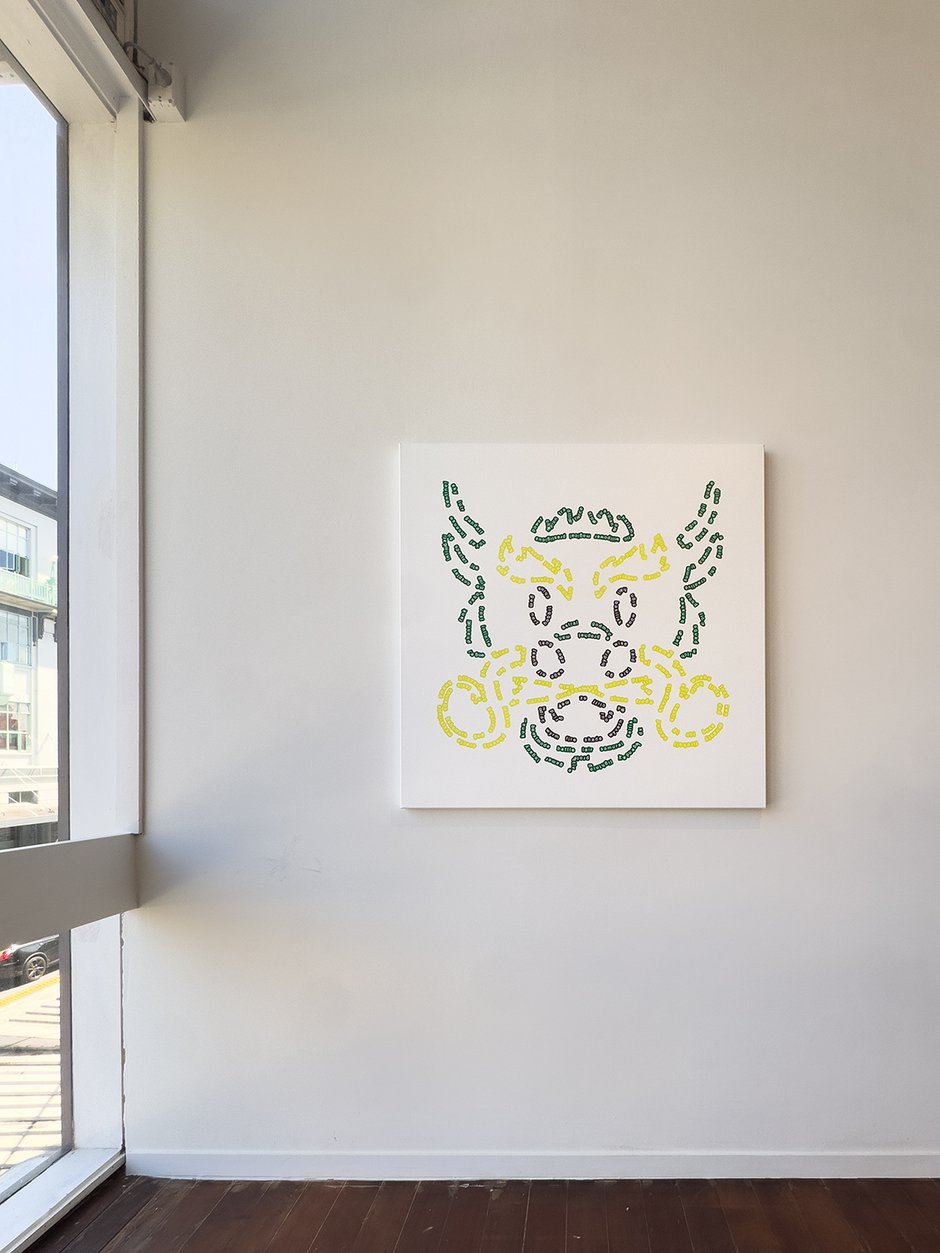
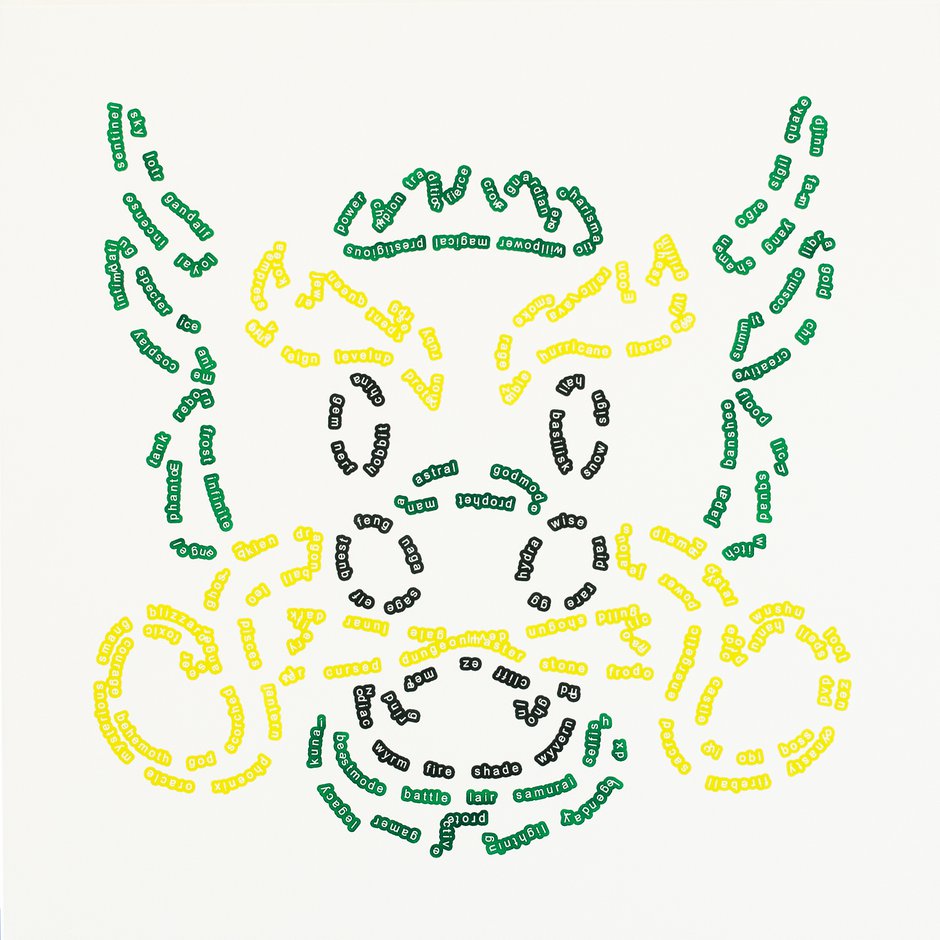
In Charles Ninow’s K’ Rd space (upstairs in St Kevin’s Arcade) Jerome Ngan-Kee presents an array of coloured words, short phrases, or blended word pairs, on acrylic paintings. These texts make up bits of hovering shaped lines that collectively form larger images rendering emojis—those normally tiny little signalling circular faces occasionally interspersed with text.
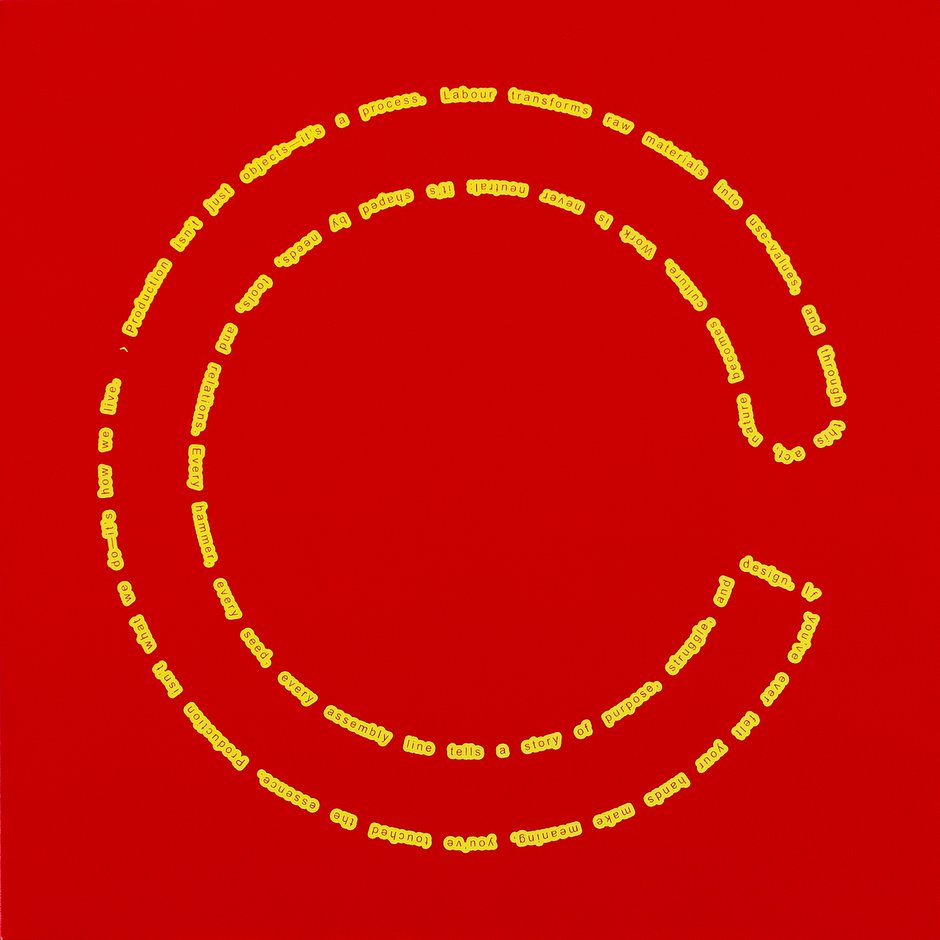
The flowing sentences all come from Karl Marx’s Das Kapital. Like linear floating bubbles they, as verbal ‘concrete poems’ featuring well known emoji characters, delight singly through the individual textual meaning of each line, as well as with all elements together as a cohesive unit. They are thus readymades. Three hues are used for the texts: lemon, dark green, black.
The lines of lettered words are fascinating, particularly as they are joined up to form (as elongated bubbles) the outlining contours of recognizable shapes, as if drawn. Sometimes the internal letters get inverted, overlapped or jammed together. Peculiar alphabetical things happen when longer words attempt to go around tight corners.
Here are two examples of the semi-random (as opposed to ‘totally random’) texts found within the drawn outlines. As you can see, they more than half make sense. They are not even remotely incomprehensible:
Surplus value isn’t extra—it’s the engine of capital.
We live in systems that promise freedom, yet bind us in hidden contracts.
In eight of the canvases the displayed linear image is created by a text on a red or yellow field (Technology Paintings), and in four others with white backgrounds, the texts are generated in turn by the images they render (Token Paintings). Because of the geometric formation of the textual arrangements which sometimes are looping and continuous, there are gaps to indicate paragraph beginnings and ends, and tiny double or single arrows inserted amongst the letters to usefully confirm these.
This perplexing but intriguing show, with its provocative and unusual use of what initially seems to be ‘randomly mangled’ theory, is accompanied by an excellent short online essay by Ngan-Kee and Ninow that states that the drawn texts use generative AI in their paragraph selection and that the various curved figurative components within their formation quote Marx. The dozen paintings are a bit like delicate, linear, coloured pencil drawings that are usually placed on white paper fields. There is an online explanatory essay— https://www.charlesninow.com/content/exhibitions #mce_temp_url#
Of course, a multitude of nagging questions accompanies computer-reliant shows like this. You might search for signs (real or illusory) amidst the clinical ambience, of the ‘human touch’ that brings intellect, warmth, likeability and humour; tricky though they may be to define. Animal or alien faces are rife, as are chain links, teetering boxes, burgers, copyright symbols and panopticons reveling in abstract symbolism.
The invite features a crying but grinning face of a cat. That revels in paradox, for this deliriously chirpy feline has huge tears. It must be crying out of joy. I think that is the intended interpretation. (An included image of a devil also has tears, but the mischievious demon’s eyes are watering, as if anticipating the pleasure of causing trouble.)
Still, what will most viewers make of the striking promotional pussy image? Is the cat too sweetly ingratiating to gain credibility? Too saccharine for a ‘normal’ contemporary art audience, too cute? Or is it actually the opposite? A beast that is overtly confrontational and slyly malicious?
A celebration of ambiguity, perhaps?
John Hurrell
 Advertising in this column
 Two Rooms presents a program of residencies and projects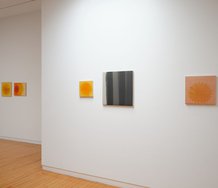
This Discussion has 0 comments.
Comment
Participate
Register to Participate.
Sign in
Sign in to an existing account.