




John Hurrell – 17 November, 2011
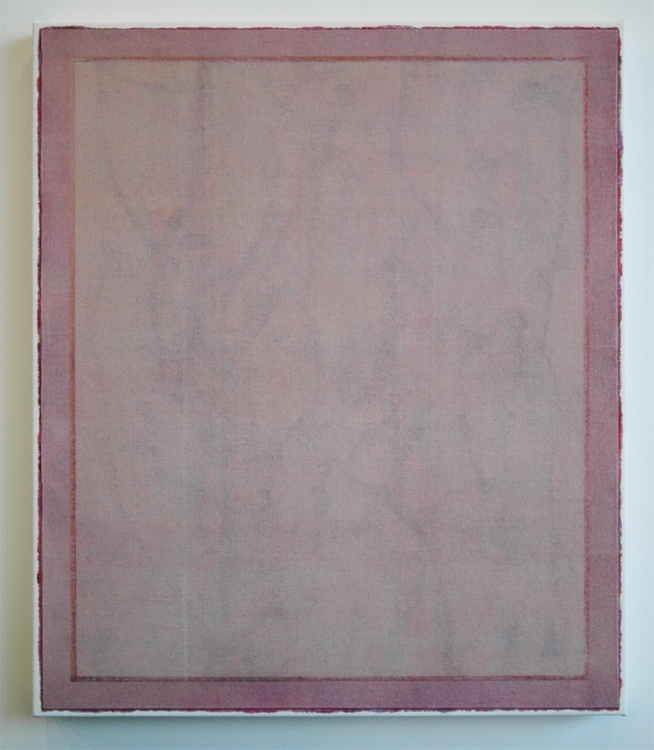
The size of these works is just as important as the overall, low density, mark application, each viewing experience overwhelmingly bodily, and the brush-scuffed picture-plane particularly atmospheric. They are slablike objects, even though the applied colour is masked around the white edges and often bleeding, and the drawn marks diffuse.
Geoff Thornley is a much admired painter living in Auckland who has been exhibiting since the mid sixties, and is chiefly known for his elegantly nuanced, shaped geometric panels, and glassed-over rectangular grids of meticulously stained paper.
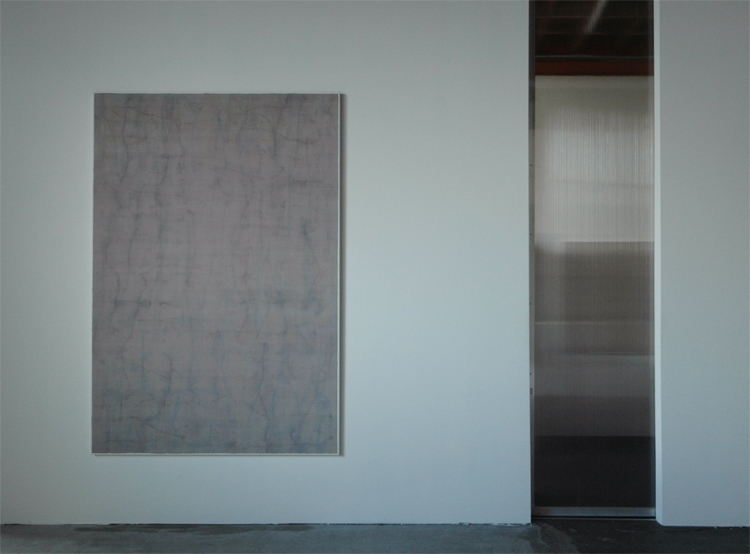
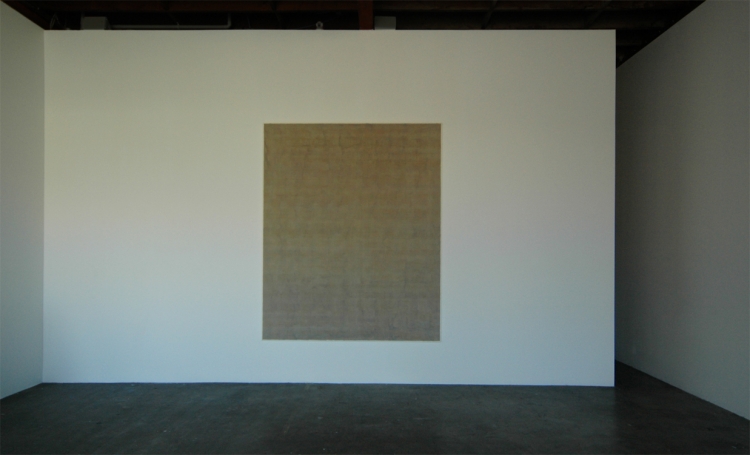
In this Fox Jensen show, his first at this venue, he presents in the main space - on three walls - five very large canvas stretchers that you (in your imagination) can walk into, arranged as a left to right sequence, and listed as one work. Its title is that of the exhibition: The Voice of Mimesis. Made during 1999 - 2000, these huge greyish paintings seem very late fifties - early sixties. Mark Tobey exploded and expanded. Definitely retro: pre-Pop art in ethos. That might be why he has waited a decade to show them.
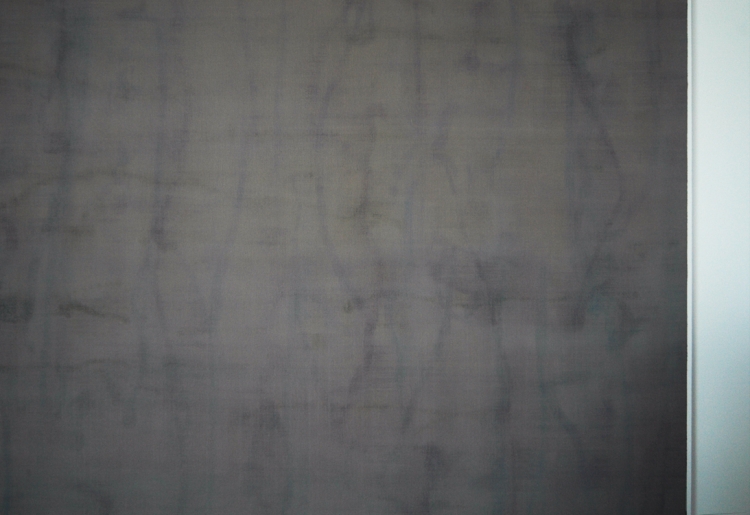
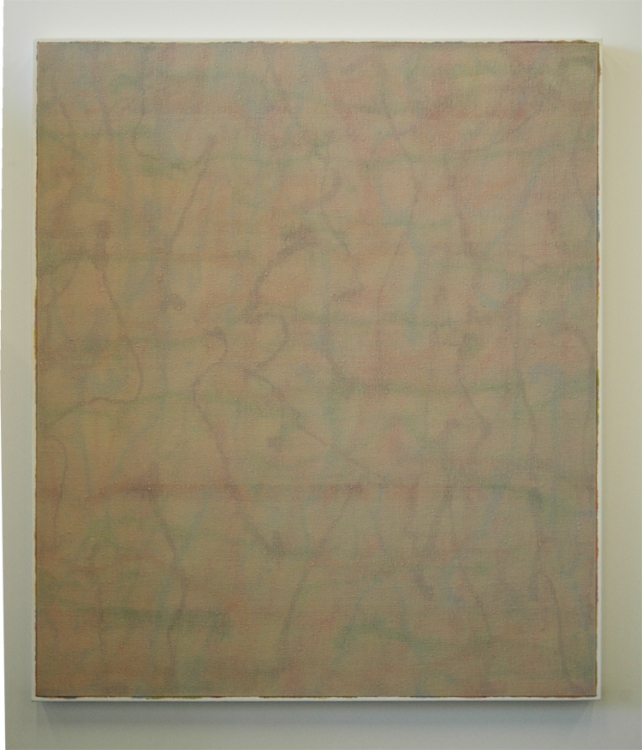
At first glance they are like the linear paintings of Brice Marden, but much much fainter, with a deceptively scrubbed appearance: oil painted marks made with a dry brush so that their discontinuous sweeping arcs - that roughly form a dangling net - are not too pronounced, but not too tentative either.
On most of them Thornley’s earlier (and so fainter) strokes are mostly mauve and vertical, whereas the last few (darker) lines, slowly dragging, are green and horizontal. Overall there is a faint milky film that seems to have been horizontally scraped across the canvas surface, accompanied by a vague suggestion of a wobbly, flapping matrix just detectable behind sheets of layered paint.
The biggest panel, on the middle wall, has a muddy brown, reddish khaki, claylike field. Its delicate rhythmical marks seem slightly more separated than those on the other stretchers. This brings a vaguely cubist feel - the presence of implied forms. On the other hand the airy disembodied traces in the other pale mauve/grey panels seem less shapely and anchored - they hover, comparatively gnarled, twitchy and agitated.
The size of these works is just as important as the overall, low density, mark application, each viewing experience overwhelmingly bodily, and the brush-scuffed picture-plane particularly atmospheric - especially when under the reflective natural light coming from an overcast sky. They are in fact slablike objects, even though the applied colour (thicker than you expect in its many accumulations) is masked around the white edges (often bleeding), and the drawn marks diffuse.
That scattered quality involving shimmering light is not what Thornley is usually known for, even though in 2006-7 he created similar White Line paintings to be shown in 2008 in Wellington. Esteemed for his interest in shape, the dynamics of his inventively contoured borders, or rectangular edged tensions affected by superimposed taut lines, these works of his from ten years ago are a surprise, being ‘slow burners’ that gradually creep up on you - not obvious at first, but with real presence. They do look old fashioned, but as recent issues of Artforum show, there is a resurgence of interest in abstract expressionism, and so such pale holistic works have suddenly become unexpectedly current.
John Hurrell
 Two Rooms presents a program of residencies and projects
 Advertising in this column
This Discussion has 0 comments.
Comment
Participate
Register to Participate.
Sign in
Sign in to an existing account.