
John Hurrell – 16 February, 2026
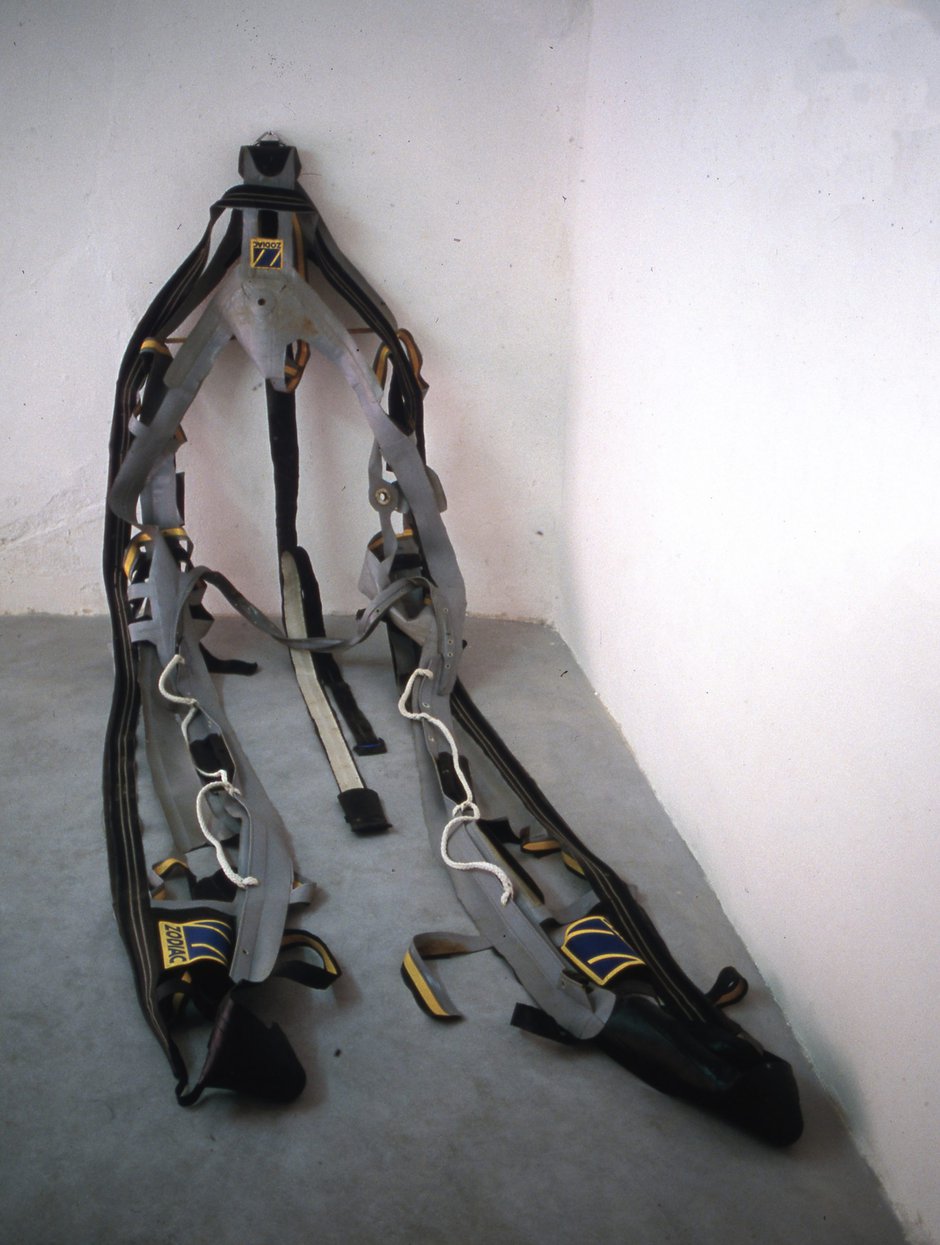
In one room, the main space, all but half of one of its walls are ignored, so that the floor presents the collapsed linear traces of a deflated rubber dinghy partially held up to fall down, and spilling out to become horizontal. This is the same dinghy (Zodiac) used by the French in the bombing of the Rainbow Warrior in 1985 which tragically killed the photographer Fernando Pereira.
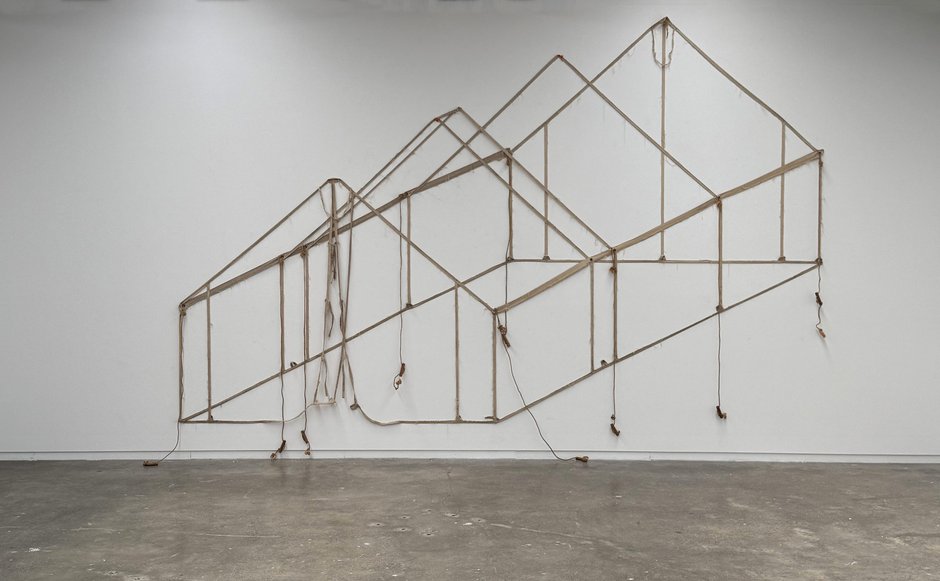
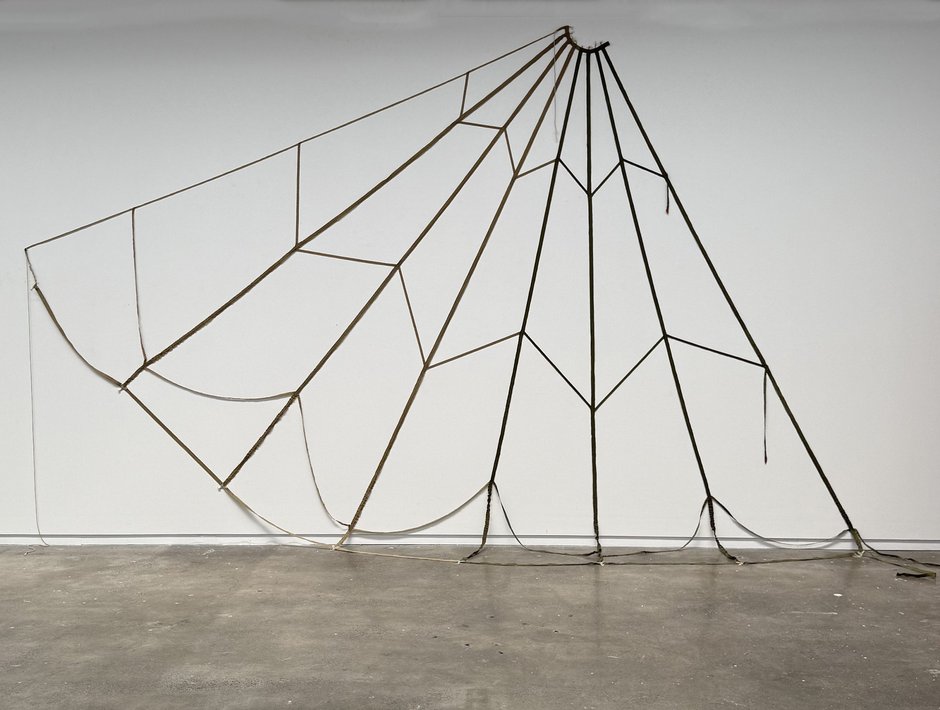
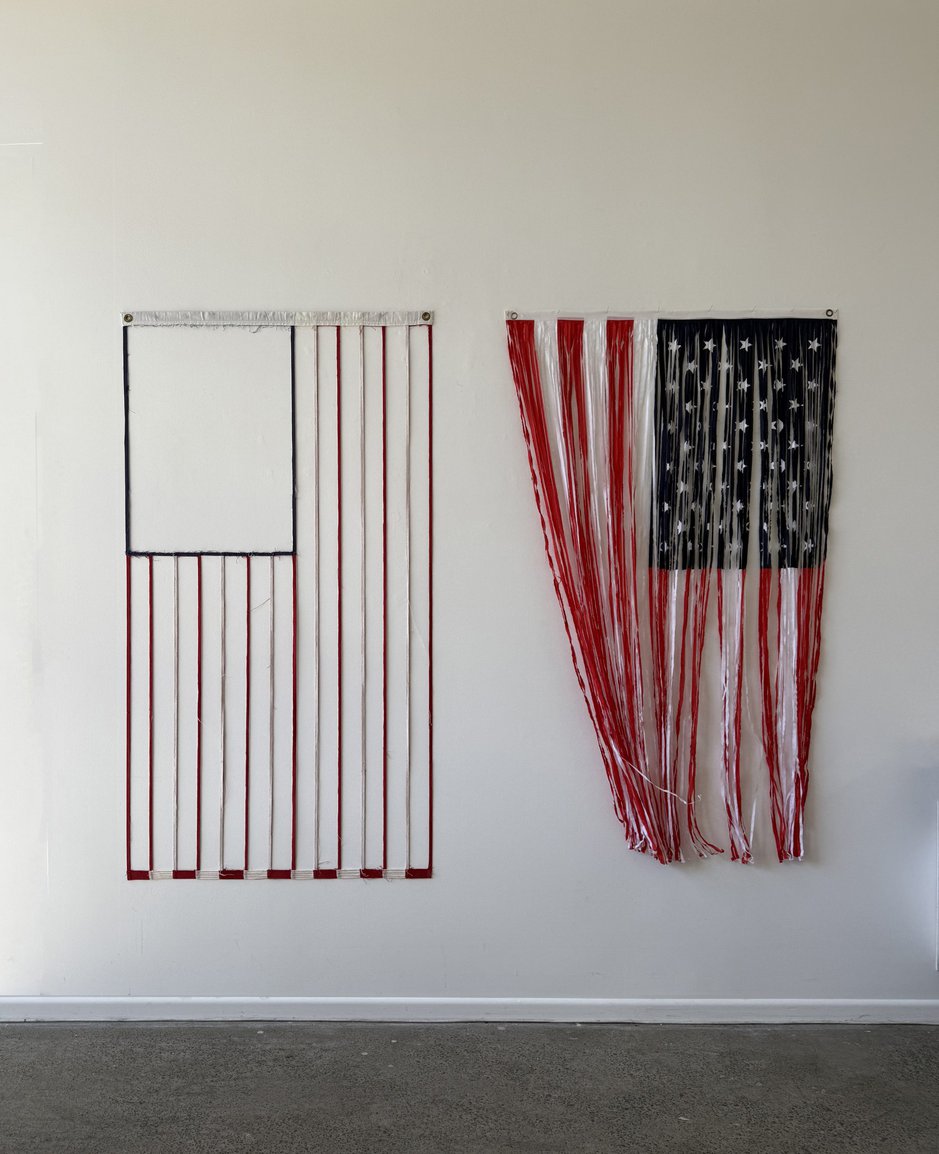
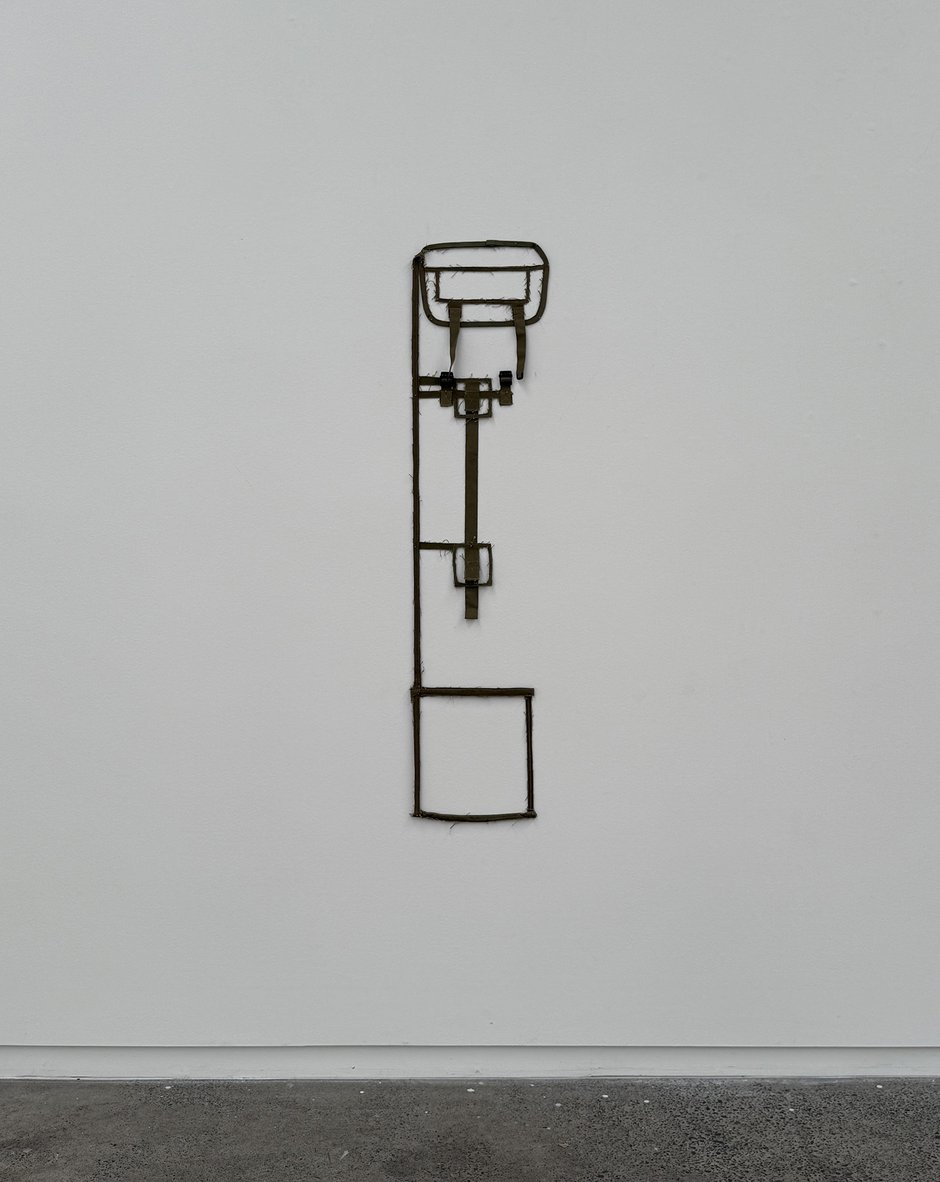
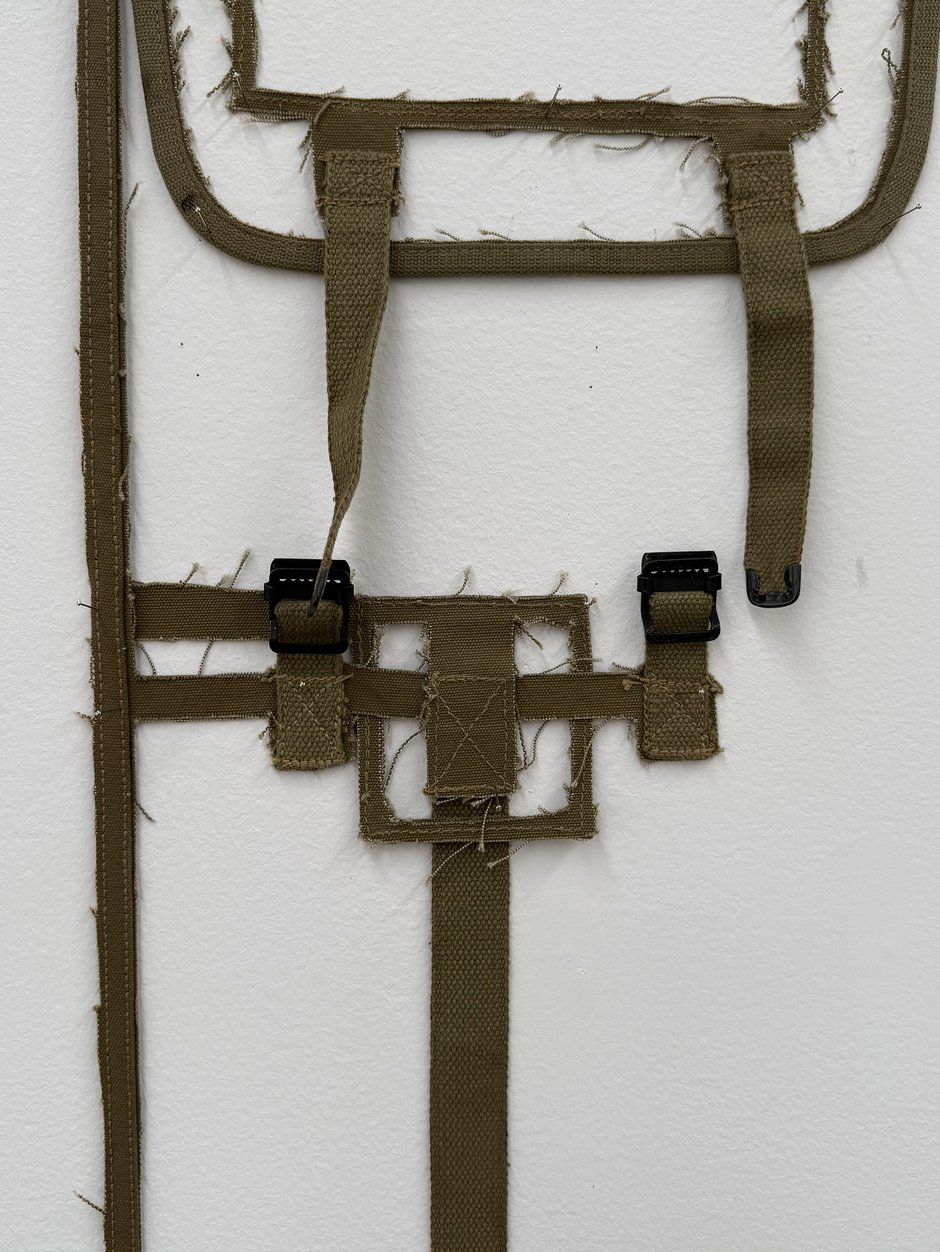
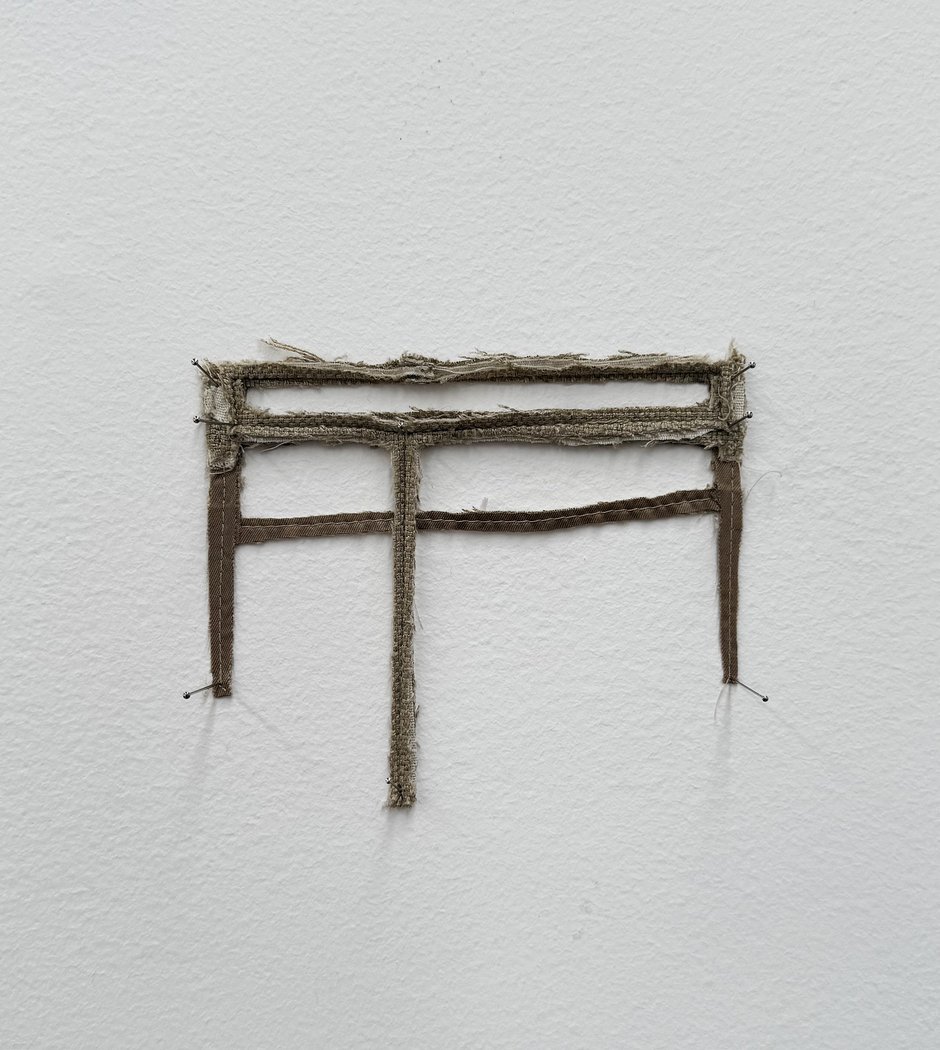
We wander into an installation where, on the gallery walls, the linear remnants of seams found in fabric garments or tents or inflatable boats are cut around so that their enclosed planar elements can be removed. The result is that the left seams serve as a kind of pinned-up ‘drawing’, a bizarre sort of cloth skeleton made of fabric edges that function as lines. Sometimes they overlap.
Spread out on the gallery wall the thirteen varied items become a variety of soft thread-dangling diagram: something immensely interesting to ponder that hints of dada; a nihilist anti-functional gesture that spurns bodily warmth or dryness. This humorous memory aid proudly proclaims its own internal ‘self-destructive’ process. Uselessness is exalted.
In one room, the main space, all but half of one of its walls are ignored, so that the floor presents the collapsed linear traces of a deflated rubber dinghy partially held up to fall down, and spilling out to become horizontal. This is the same dinghy (Zodiac) used by the French in the bombing of the Rainbow Warrior in 1985 which tragically killed the photographer Fernando Pereira.
After this subtraction of the dinghy’s planar ingredients, the transition of its support, from a multi-coloured three-dimensional maritime craft to pinned-up skinny fabric ‘marks’ on a dominant flat white wall, can be startling.
I love what Culbert does to found objects. It is ‘mutilation’ that ironically brings them new life. That sounds wicked but their new linearity enriches them and places them in art history as a sort of rethought draughtsmanship.
This particular work is openly political. This particular craft (Zodiac) was deliberately chosen to be dismembered, for historic reasons described above.
The pins that hold these various cloth lines on the vertical walls are important. Blu-tack obviously can’t be trusted, and those pins need to be easily seen so the whole process is self-explanatory.
John Hurrell
 Advertising in this column
 Two Rooms presents a program of residencies and projects
This Discussion has 0 comments.
Comment
Participate
Register to Participate.
Sign in
Sign in to an existing account.