



John Hurrell – 15 June, 2010
The females seem distressed or highly apprehensive while the males are comparatively confident. The guys are impassive but not cocky - just self contained, and at ease with themselves and the world. There is a clear separation between the sexes.
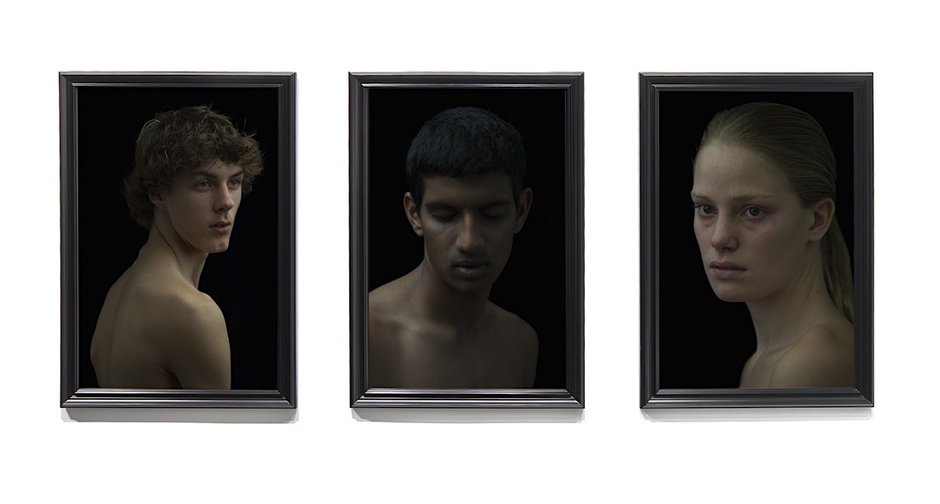
In this suite of six photographs, Roberta Thornley, more known for her mysterious glowing objects on the back lawn, instead now looks at youth, the mental and bodily development of late teenage years. While the model’s pale faces and torsos glow in the darkness this exhibition is really about anxiety. It is interesting because the young women exude it (as constructed by the artist with props, or direction) and not the young men - who seem more self preoccupied and with an inner confidence. Nevertheless both sexes seem vulnerable.
The females seem distressed or highly apprehensive while the males are comparatively confident. The guys are impassive but not cocky - just self contained and at ease, with themeselves and the world. There is a clear separation between the sexes.
Also the males tend to show upper torso, head and shoulders while the females, mainly neck and head. The best works for both sexes are in three-quarter view or in profile - being highly reminiscent of early Renaissance painters like Ghirlandiao, Baldovinetti or Piero della Fransesca - but with a glowing light reminiscent of Carravagio who came later on, though much colder. The reference to Quattrocento painting seems deliberate on Thornley’s part, and the temperature of the light is more Dutch than Italian.
Thornley’s work here is halfway between Yvonne Todd’s interest in facial nuances that oddly disturb, and Robyn Hoonhout’s portraits of the elderly. Thornley’s young faces are not for example, creepy; instead most have an openness, an appealing lack of subterfuge, a willingness to display emotion that is genuine - not manipulative. Unlike say Bill Henson there is no narrative going on, only an examination of introspective interiority.
The title of the exhibition Tomorrow implies a looking at the future from their point of view of emergence into adulthood. An unusual position for an artist who is herself in her mid twenties. And Thornley has a knack of picking for her purposes really expressive faces that are memorable, that carry a psychological maturity or incipient wisdom. The only thing I find slightly jarring is an aspect of the presentation: the black framing which for my tastes is a pinch too narrow and close to the image.(It needs a buffering mount.) A quibble; for these carefully constructed images are hauntingly mysterious and thoughtful in their exploration of character and the mental stages of life that many people go through. Quite special.
John Hurrell
 Two Rooms presents a program of residencies and projects
 Advertising in this column
This Discussion has 0 comments.
Comment
Participate
Register to Participate.
Sign in
Sign in to an existing account.