
John Hurrell – 25 March, 2026
Visually and conceptually in Teaching Aids 2 these eye-controlling methods appear to be related to hopscotch, but glowing and mystical and not activating leaping limbs. Usually there is one square left in the 3 x 3 configuration left empty, with the eight others all filled. Even if they are occasionally crossed out.
Safety in Numbers: Colin McCahon’s Dark Equations
Curated by Julia Waite
6 July 2025 - 10 May 2026
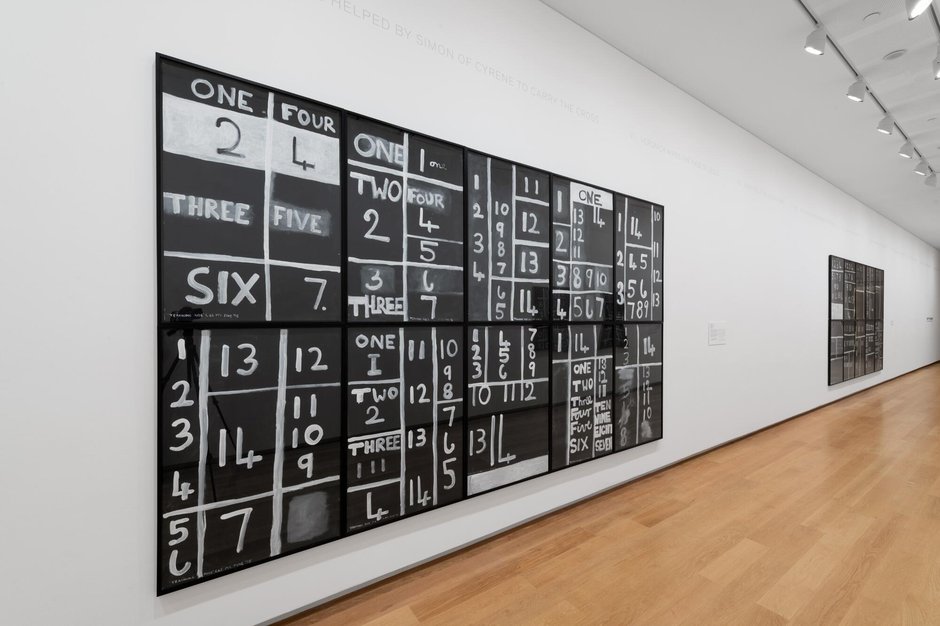
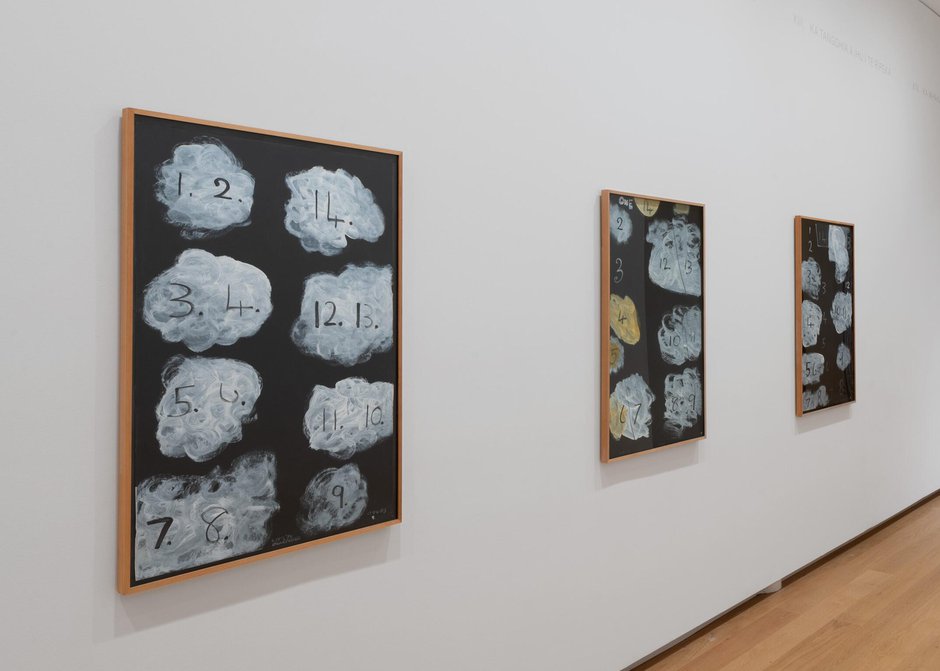
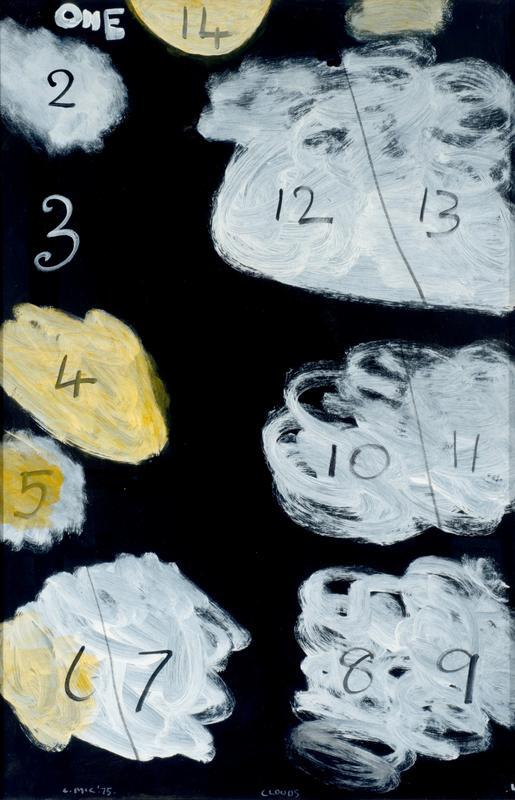
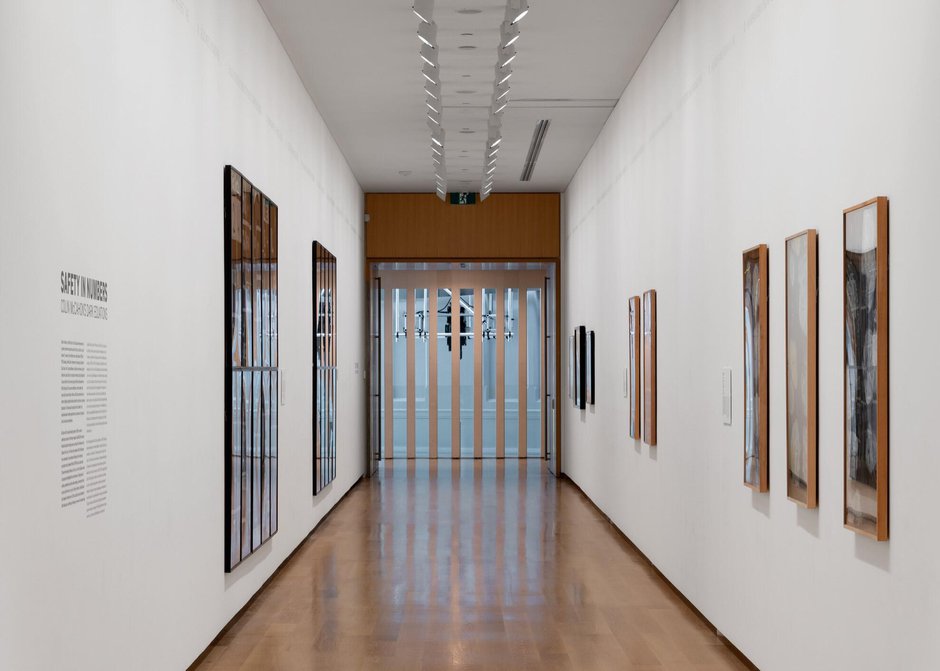
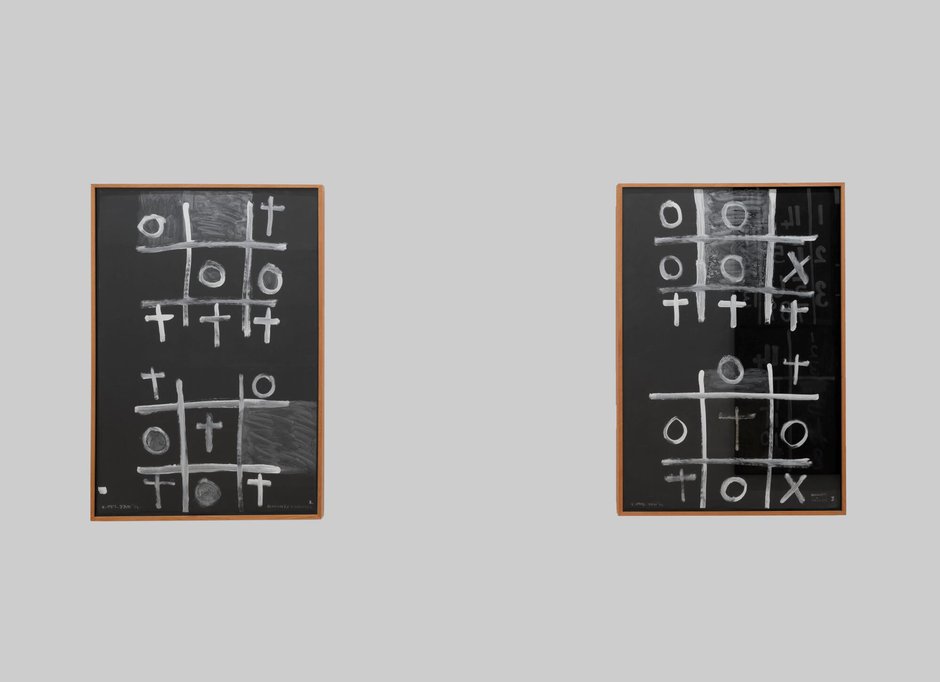
Most of these well-known ‘tough’ mid-seventies works by Colin McCahon from the AAG Collection (his Teaching aids, Clouds, Noughts and crosses, and Rocks in the sky series) have been written about by many NZ writers over the last fifty years, yet the four sets continue to intrigue because of their preoccupation with sequencing, flow and cognition-something you notice early on with their carefully painted and positioned Hindu-Arabic or Roman numbers.
Today they are presented in the Farmer Corridor. We see sections of scumbled (at times partially erased) noughts and crosses, featuring blurry, hesitant, and seemingly tentative, placements, loaded with flickering pulsing rhythms. They are quite challenging with the blurred ‘removed’ numbers openly implying a nervousness, or implied lack of faith, in their efficacy.
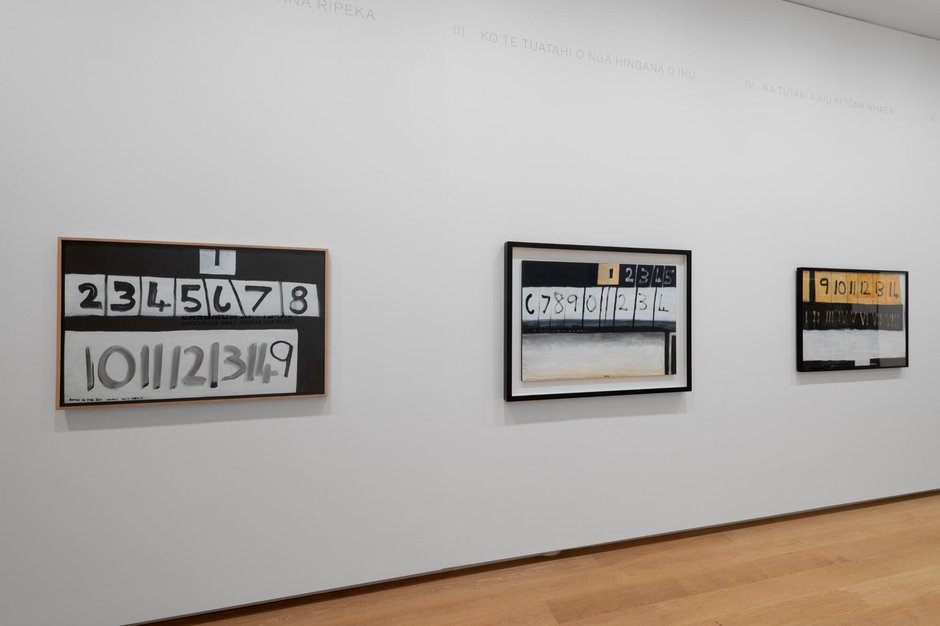
The lack of explanatory sentences and its restricted number range (1-12) paradoxically emphasize the lecture-room nature of the display, by assuming you will rise to the task of exploring the elemental ‘mathematical’ phrasings. They reference the Stations of the Cross founded on the route Christ allegedly took to his crucifixion.
Large skinny numerals are painted in thin streaky white paint on black fields, with the panels divided up in vertical rectangles, so that the sections move numerically down, then up and across, from left to right.
One of the alluded-to subject matters here is the studio activity of revision, with its seeming indifferent acts of erasure and attendant correction. Within the overall structured grid of each panel the numbers or alphabets trace a trajectory of eye-movement, delineating relationally directed (but jumping about) steps led by implied sequencing arrows we never see but remain aware of.
Visually and conceptually in Teaching Aids 2 these eye-controlling methods appear to be related to hopscotch, but glowing and mystical and not activating leaping limbs. Usually there is one square left in the 3 x 3 configuration left empty, with the eight others all filled. Even if they are occasionally crossed out.
The movement of the viewer’s eye, accompanied by an activated brain, while intensely scanning, encourages the elemental act of counting or reciting aloud. Deciphering thought is accompanied by the potentially moving (or at times willfully sealed) mouth. This wonderful show revels in a looseness presenting an exhilarating spontaneity, while also displaying a questioning of the activity of writing marks.
It is hard not to be impressed by the cumulative effect of all these enigmatic, glassed-over, framed works put closely together in a narrow art gallery ‘hall-way’. Such a treat. The experience is very much a bodily encounter that is unusual because of the emphasis on the domination of many numbers on many paintings. Triggered by their close collective proximity; and the artist’s mental and manual dexterity. And Biblical knowledge.
John Hurrell
 Two Rooms presents a program of residencies and projects
 Advertising in this column
This Discussion has 0 comments.
Comment
Participate
Register to Participate.
Sign in
Sign in to an existing account.