
John Hurrell – 16 April, 2026
And political too, as the title indicates, focusing on gender and ‘family'. They affect the nature of the viewer's bodily interaction to the art: their head-angled response; a skewed, slightly bent-over, indirect form of peering that gambles on the light between works (direct or bouncing off the walls) as being sufficient.
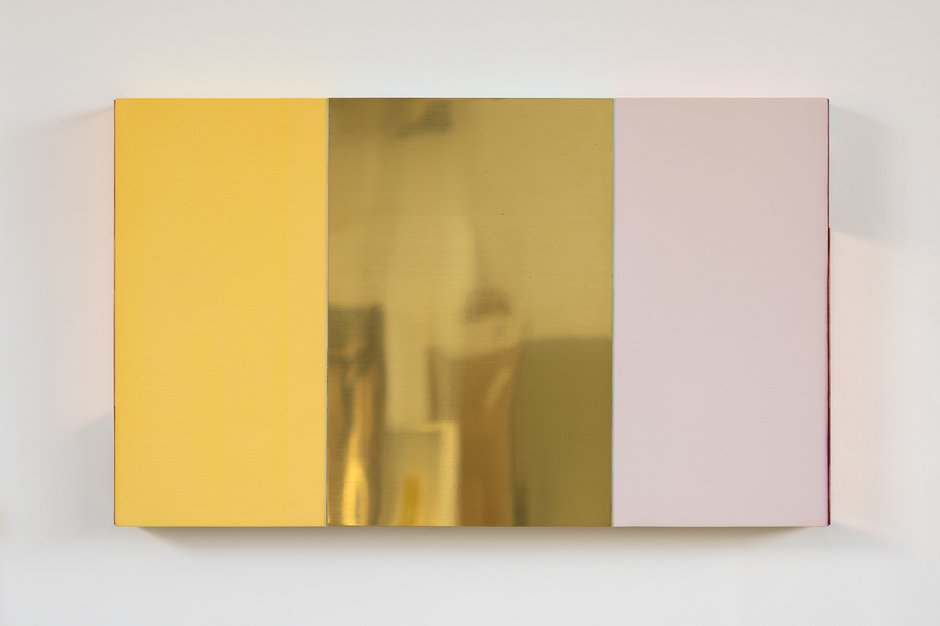
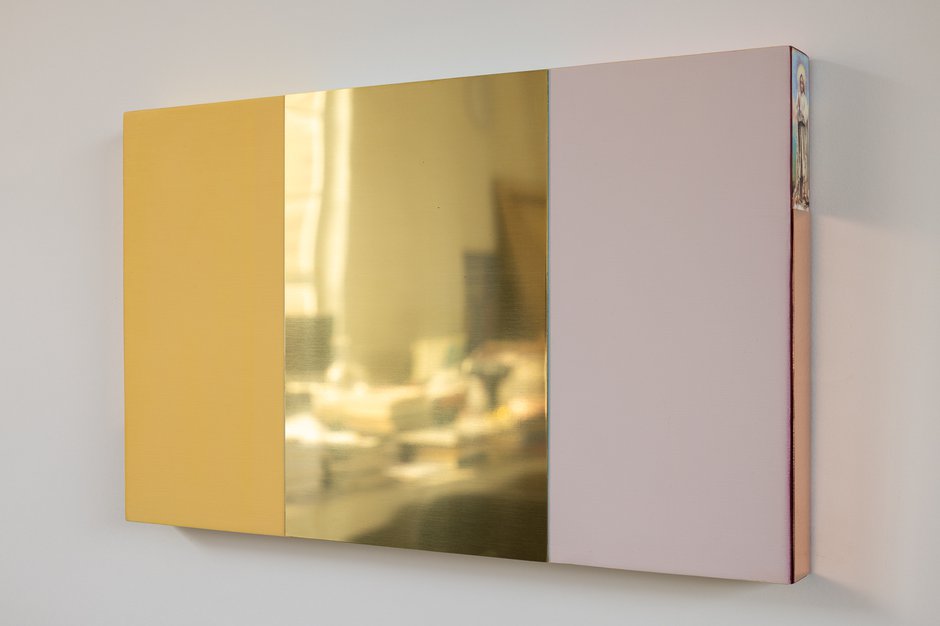
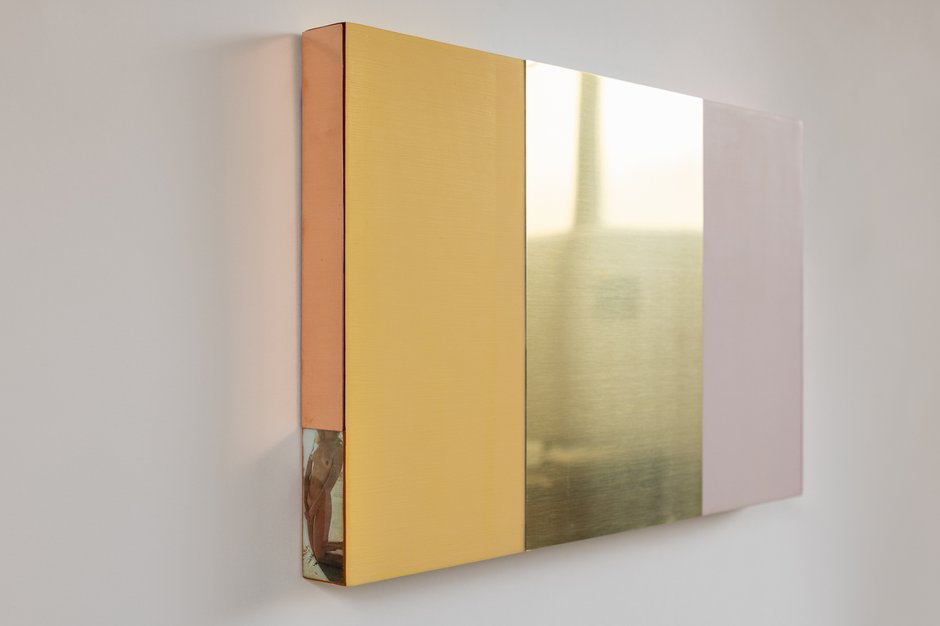
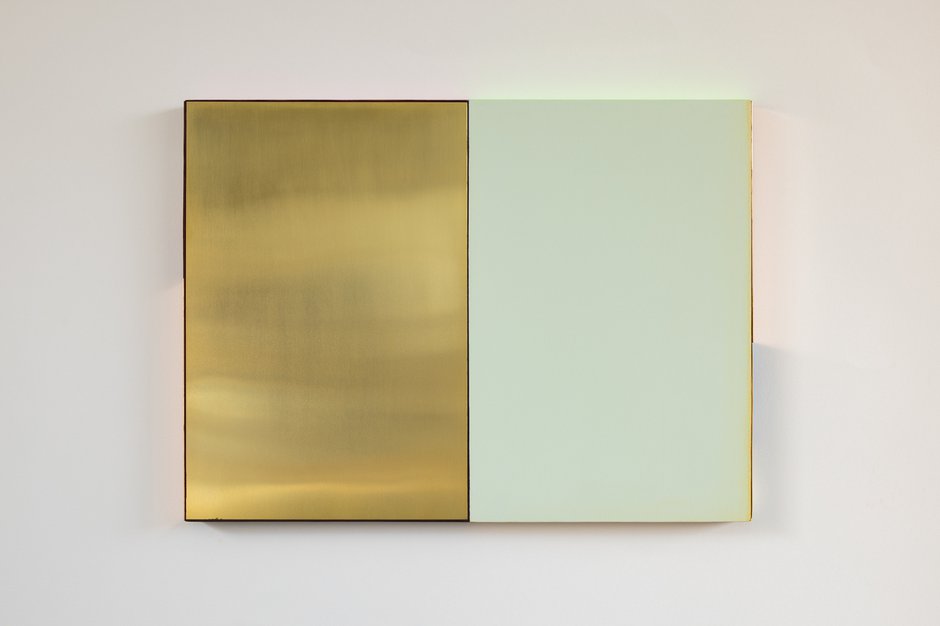
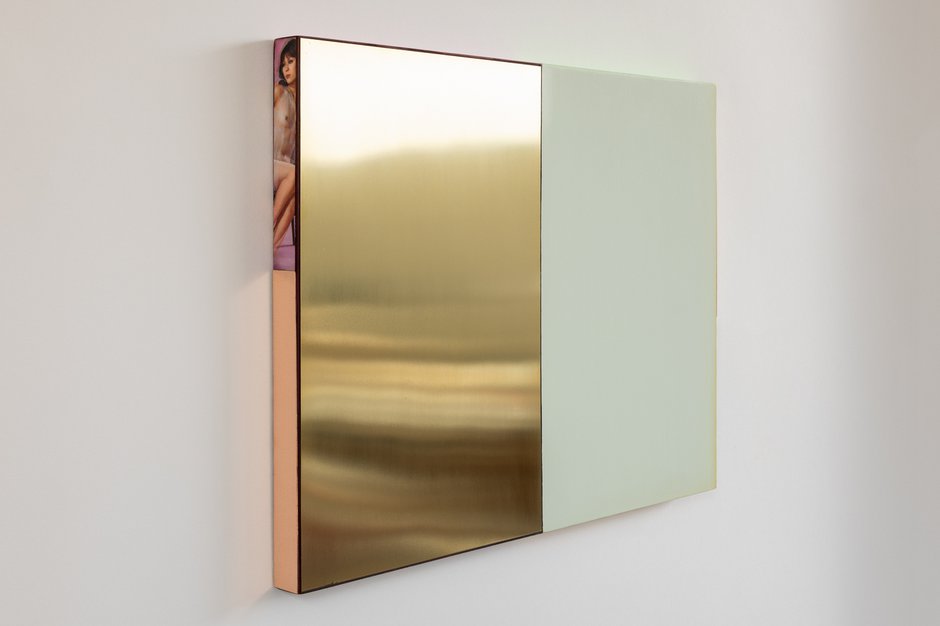
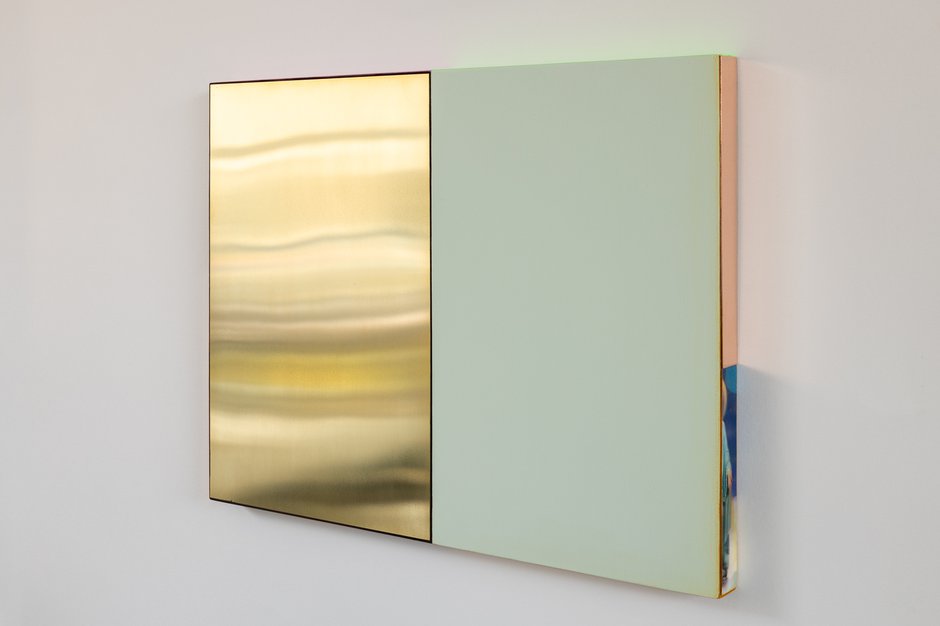
In these highly unusual couplings or triplets of mono pastel-coloured and reflective metal rectangular panels, it is their odd distinctive sides that we naturally first concentrate on. They feature many options. These for example include vertical lenticular edges that present moving narratives that involve saints; fluorescent-coloured top edges that reflect on to the gallery walls above and impossible to photograph; or else thin dyed strips of transparent silk dangling from their righthand side.
In vivid contrast some others provocatively celebrate teasing (‘naughty’) pin-up girl eroticism.
Simple ‘frontal’ monochromes, by themselves, in spaced apart isolation are not included, so Bustin’s investigative ‘sideways’ alternatives (that strangely interact with the front surfaces by alluding to planes around vertical corners) might be considered eccentric.
And political too, as the title indicates, focusing on gender, desire, and referenced (but excluded) ‘family’. They affect the nature of the viewer’s bodily interaction to the art: their head-angled response; a skewed, slightly bent-over, indirect form of peering that gambles on the light between works (direct or bouncing off the walls) as being sufficient.
When the painting sides are lenticular as well as being narrow, any rapid change in viewer body-position causes a quick response in a perceived spiritual or carnal narrative, so the visitor has to be optically alert. And potentially act—if so inclined.
Plus (as part of this) there are blurrily reflective horizontal copper panels near the bottom edges of some that as parts of the ‘painting’ or ‘wall sculpture’ embrace localized ‘real’ space as well as movement, creating an insistent mental involvement with the gallery visitor that (though fuzzy) is difficult to flick off.
And other symbolic (quite traditional) elements regularly occur like ceramic flowers resting on top and a narrow vertical steel rectangle on the wall extending down to the floor between higher-positioned aluminium panels. They overall create a remarkable ‘encountering‘ religious experience for those of us living in a vascillating but complicated ‘McCahon country’ willing to embrace it.
Many in our diverse art community will not. But not all.
John Hurrell
 Two Rooms presents a program of residencies and projects
 Advertising in this column
This Discussion has 0 comments.
Comment
Participate
Register to Participate.
Sign in
Sign in to an existing account.