

John Hurrell – 13 July, 2018
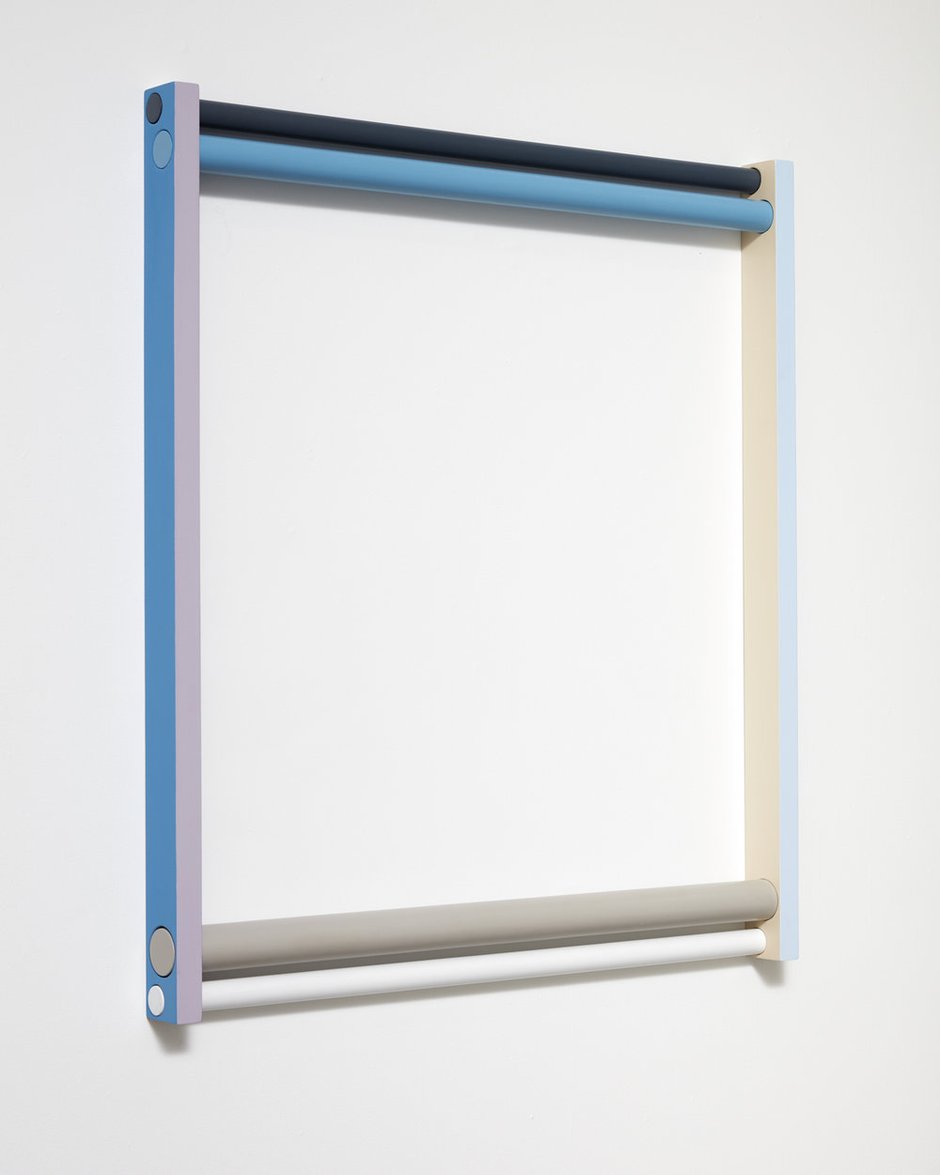
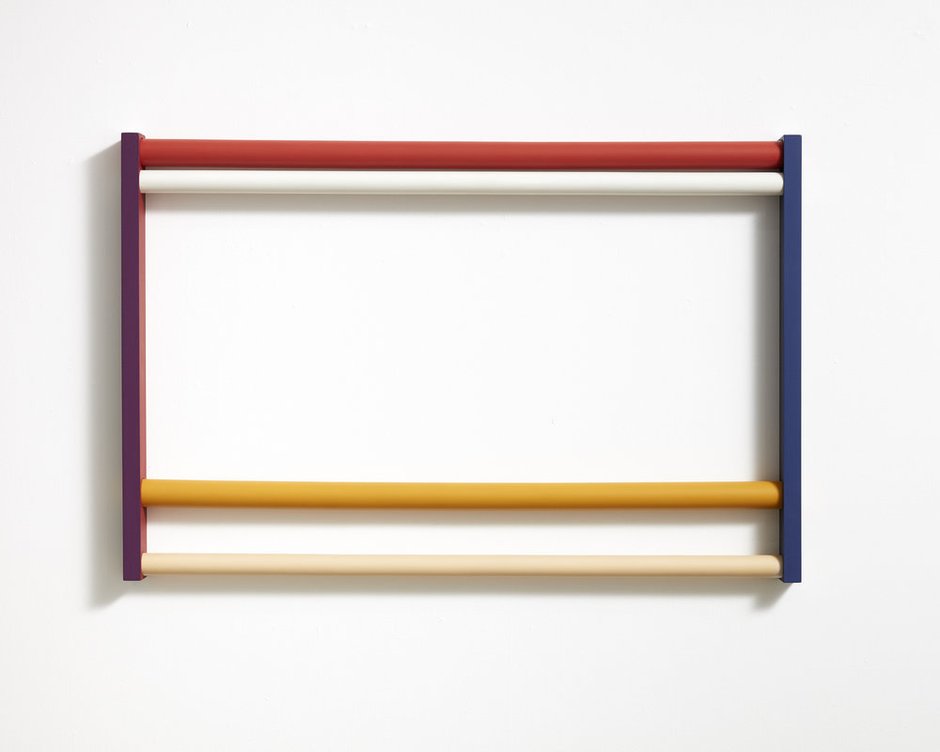
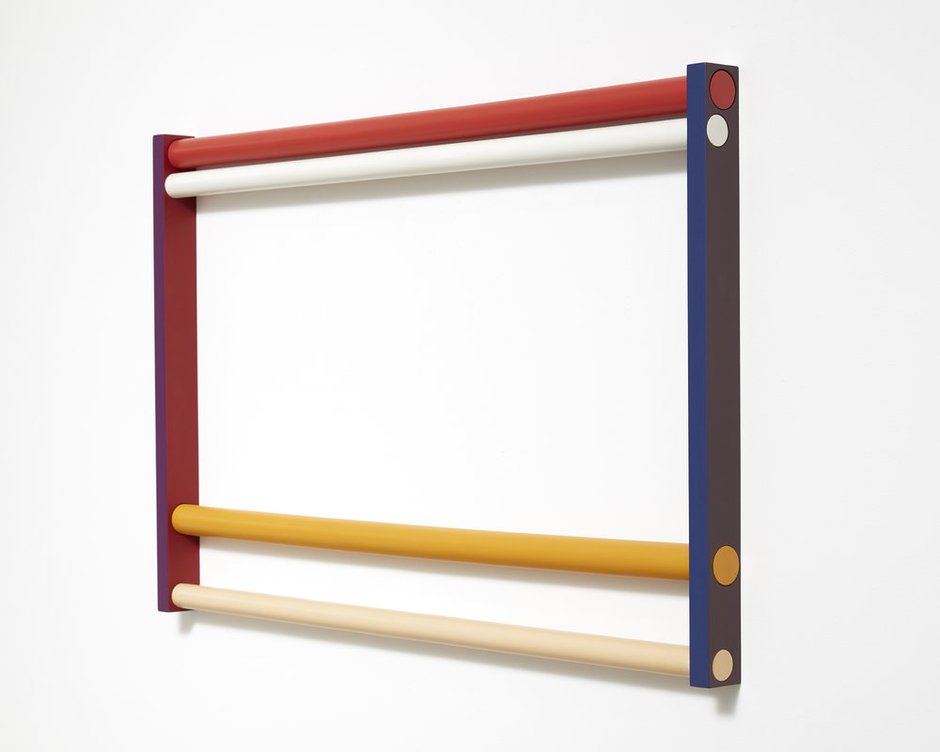
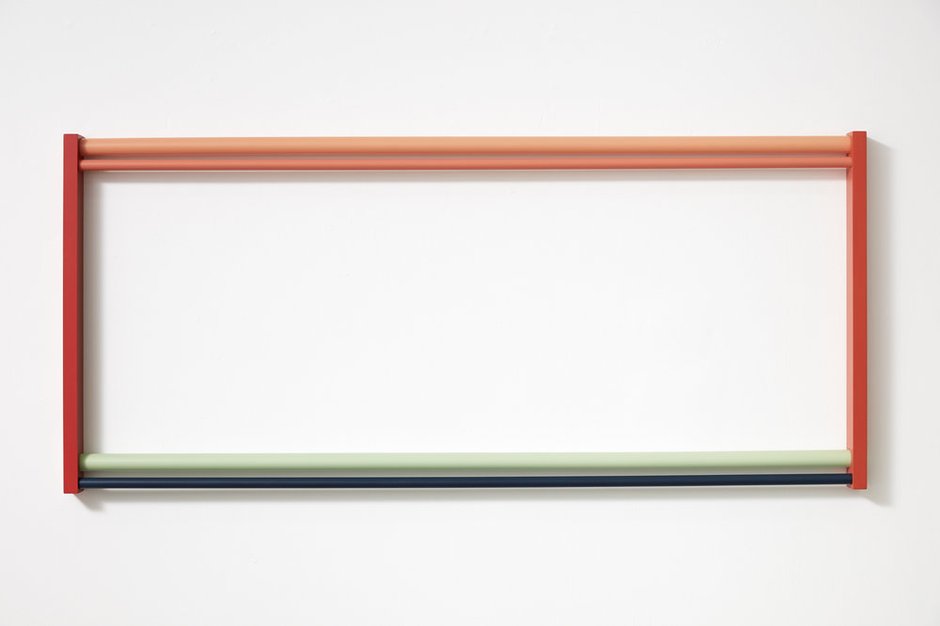
Attending to those different sized monocoloured circles on the outside vertical planes—planes that often switch colour as you move around them—brings to mind their formal capacity as dots, dots that stretch out into horizontal lines in the centres. These paired lines are reminiscent of wooden pull-up bars on the walls of gymnasiums, and metaphorically suggest some sort of ‘muscular' mental activity on the part of the painting viewer, a rigorous conceptual restructuring.
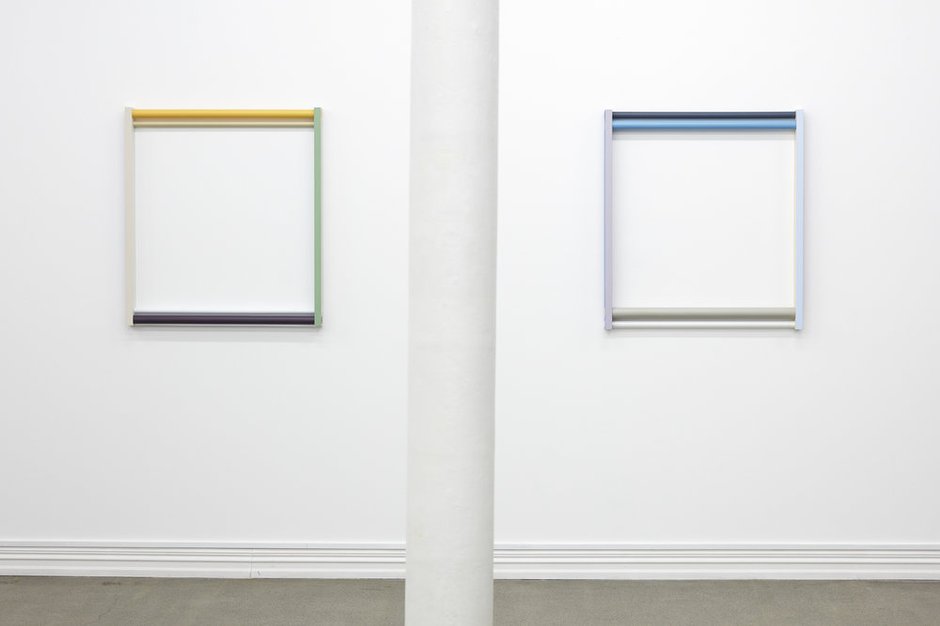
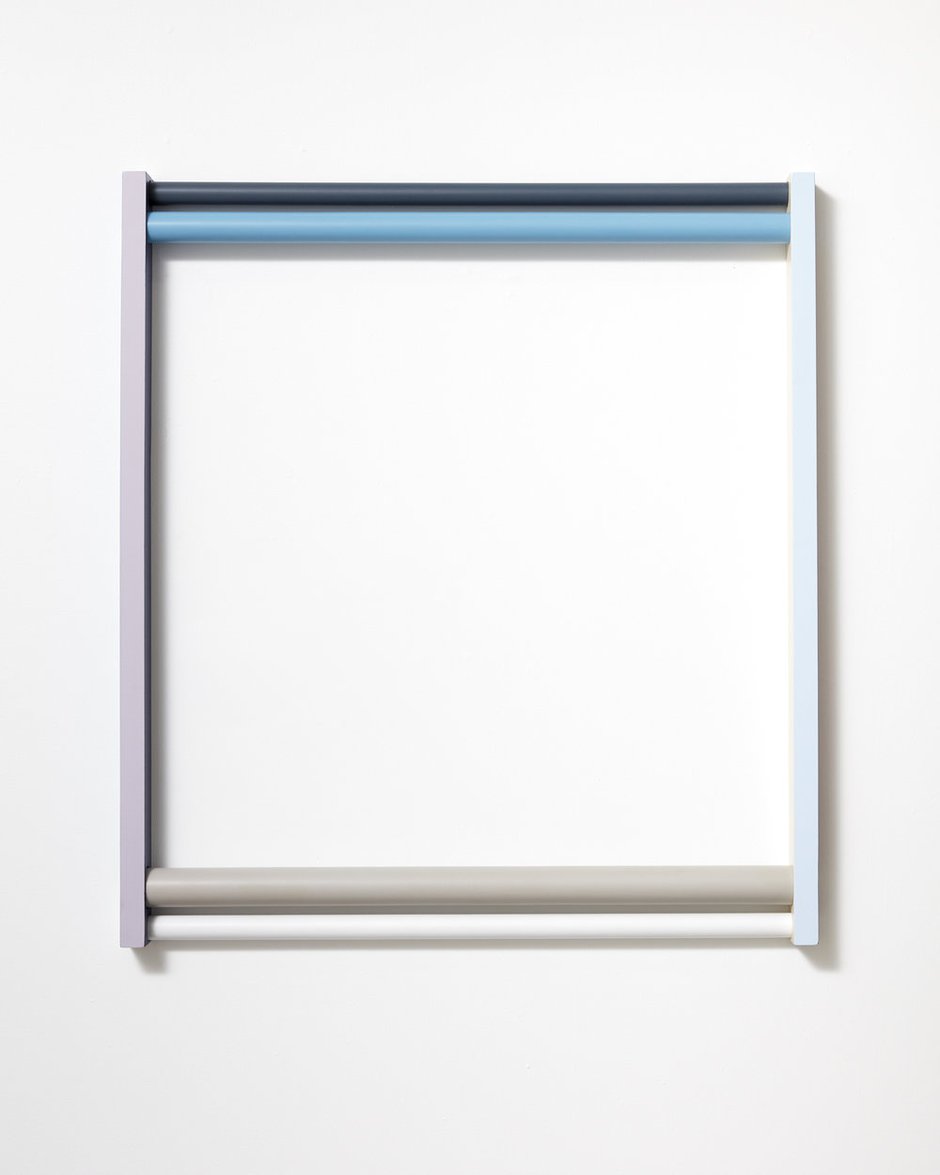
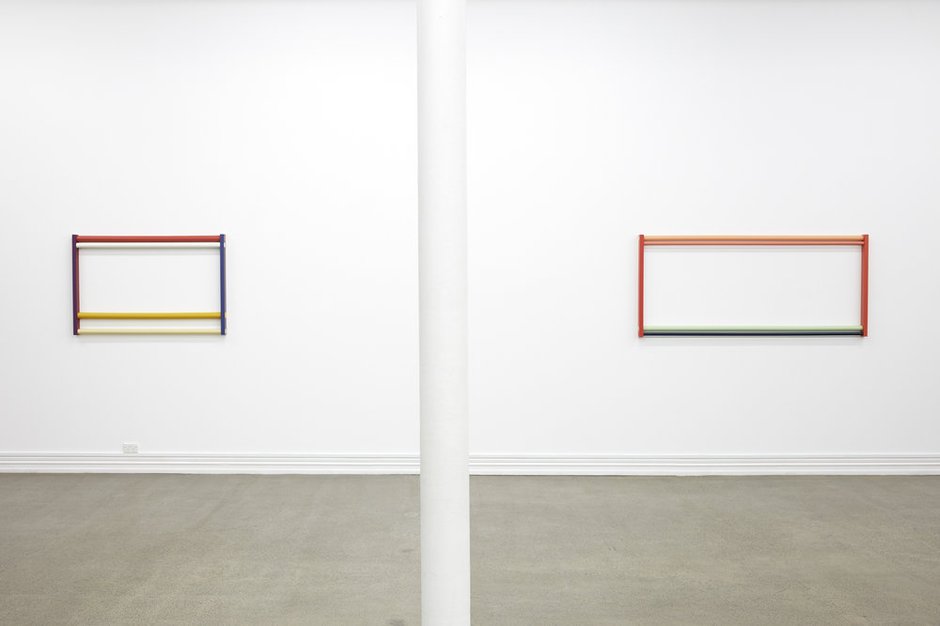
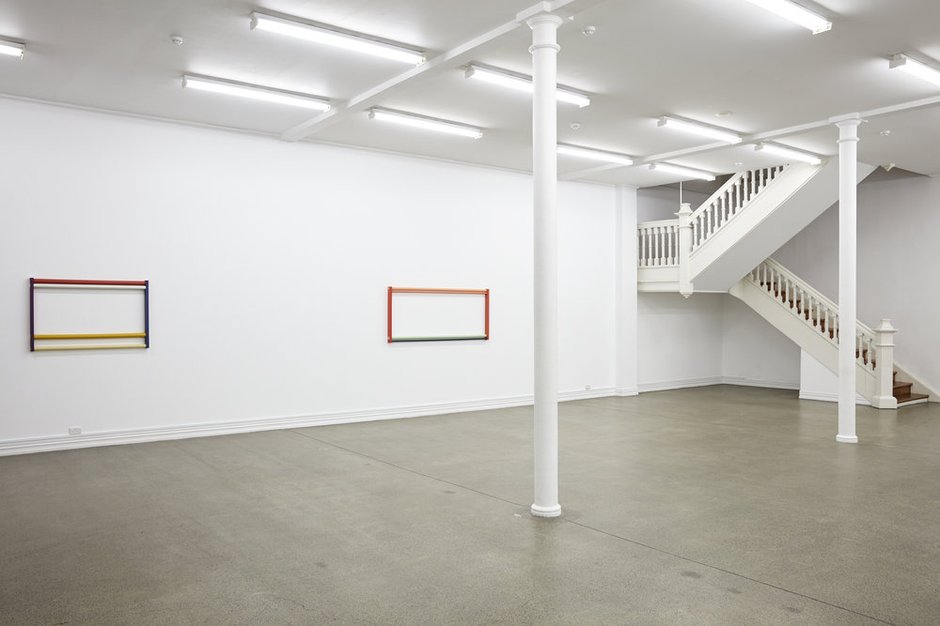
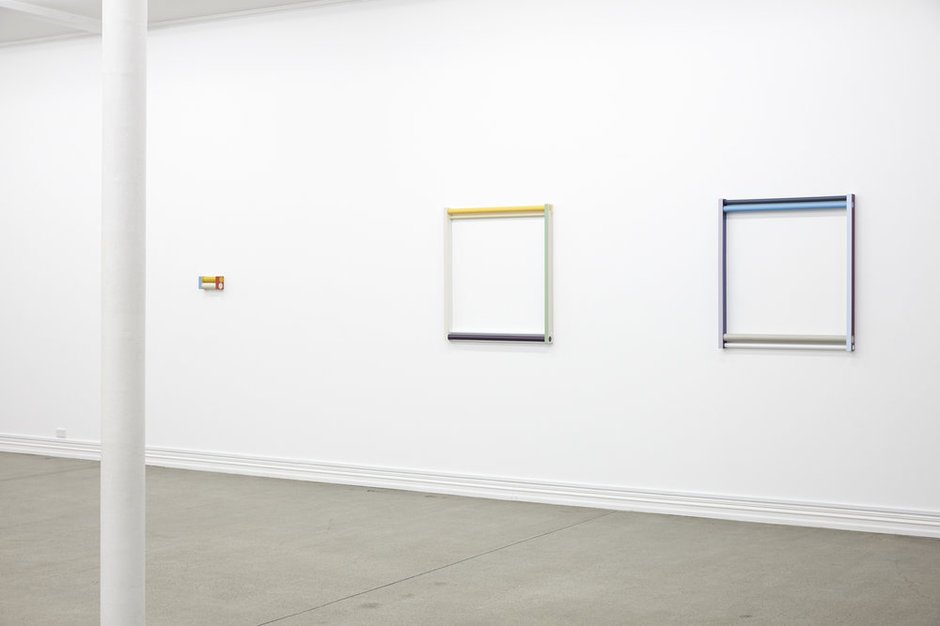
In this presentation of six painted wall sculptures, the emphasis on an outer, painted frame—with no material centre—links them to Seung Yul Oh’s minimalist paintings of a few years ago where white canvases had colourfully painted ‘frames’ with oddly butted or mitred corners. These eccentric new square or horizontally rectangular works seem to allude to the shallow spatial preoccupations of Donald Judd, the horizontal stripe paintings of Kenneth Noland or Gene Davis, and the wooden pull-up bars fastened to the walls of any popular gymnasium.
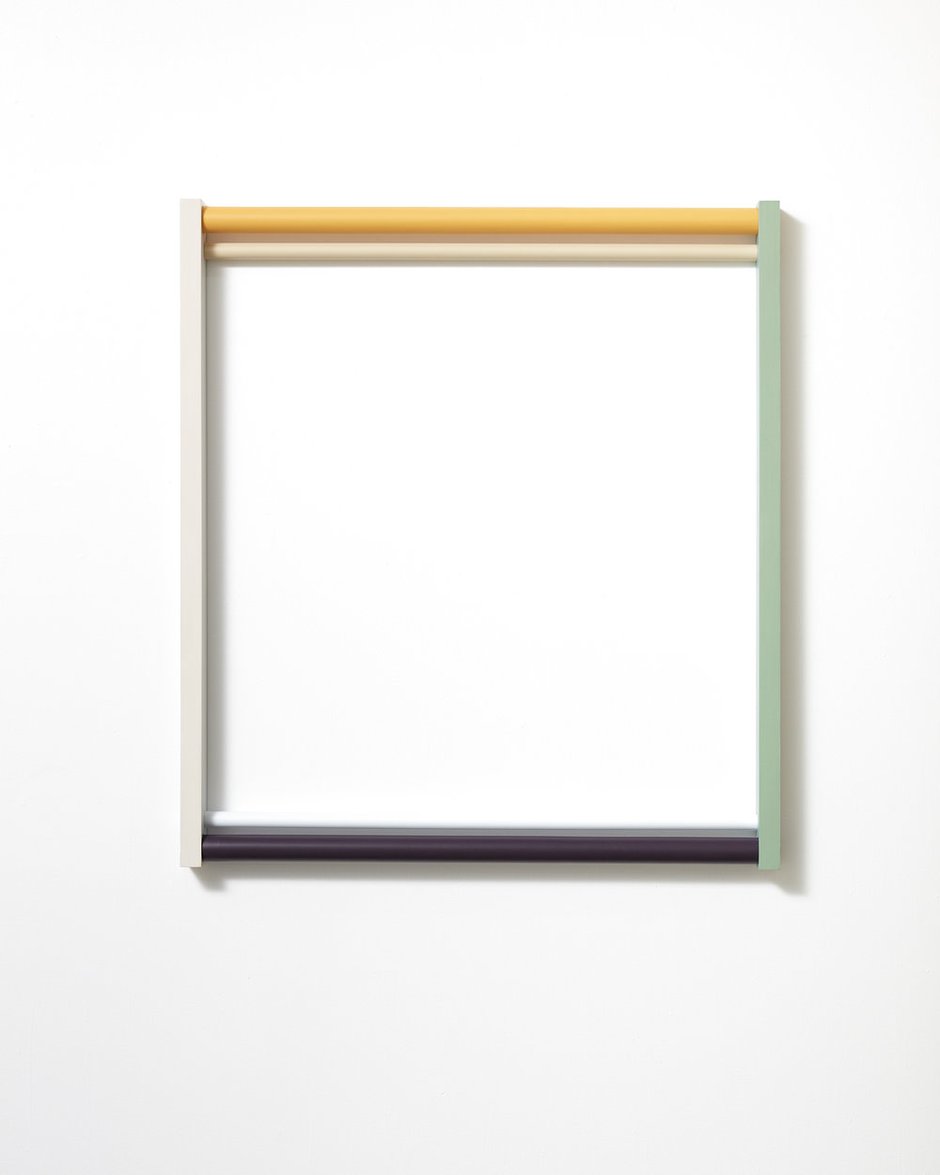
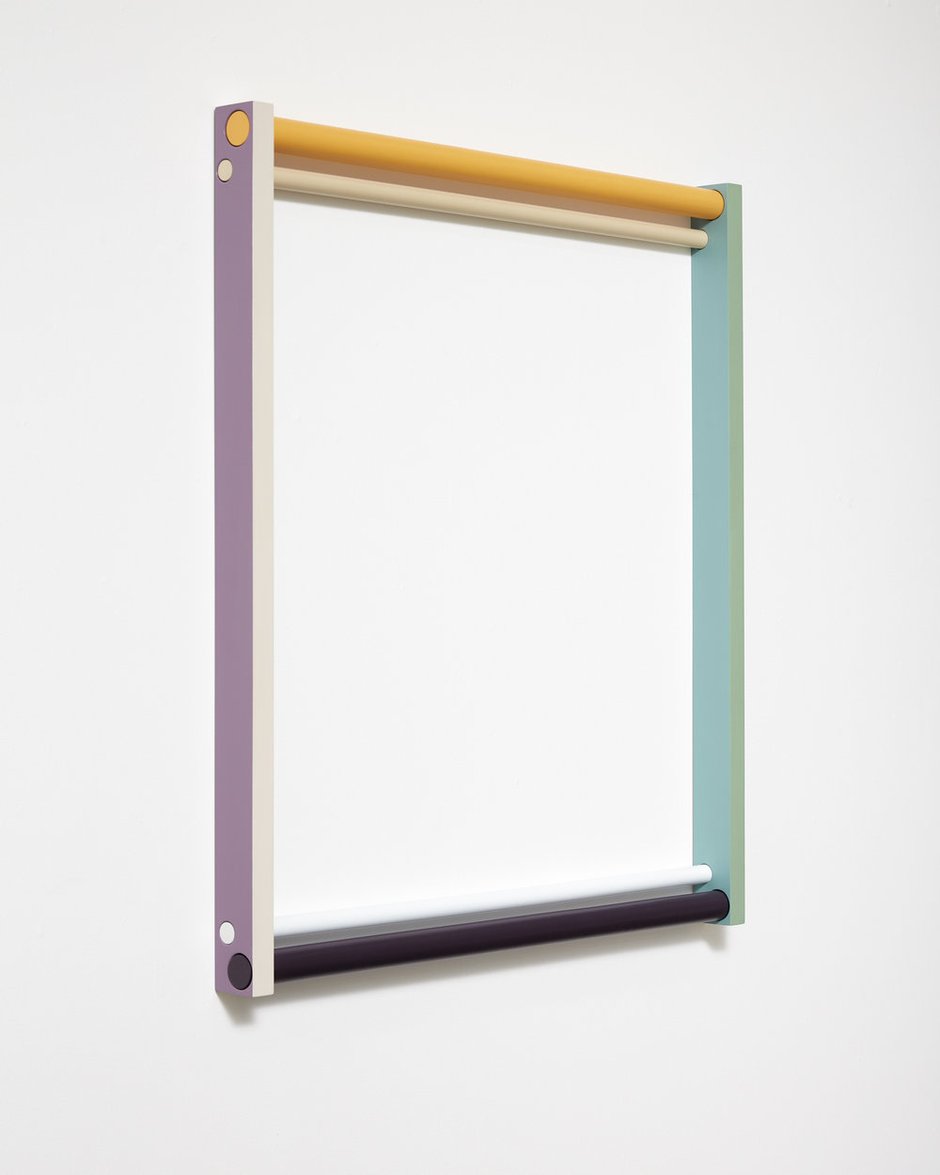
The proportions of the sides are a key factor for these works’ visual impact, as are the choice of colour, the closeness of the horizontal paired lengths, the alignment of the rods, the difference in their diameters, the role of shadows and the distance between the vertical sides. For the interlocking components of each portable wooden Horizontal Loop wall sculpture, the artist has made extended cylinders for the top and bottom horizontal units, and rectangular-in-cross-section batons for the left and right vertical sides. There are usually six elements in total for each work, with a pair of extended rods of different thicknesses above and below—held in position through large round holes in the sides.
Attending to those different sized monocoloured circles on the outside vertical planes—planes that often switch colour as you move around them—brings to mind their formal capacity as dots, dots that stretch out into horizontal lines in the centres. These paired lines are reminiscent of wooden pull-up bars on the walls of gymnasiums, and metaphorically suggest some sort of ‘muscular’ mental activity on the part of the painting viewer, a rigorous conceptual restructuring—perhaps speculating on historical critiques in terms of colour and space.
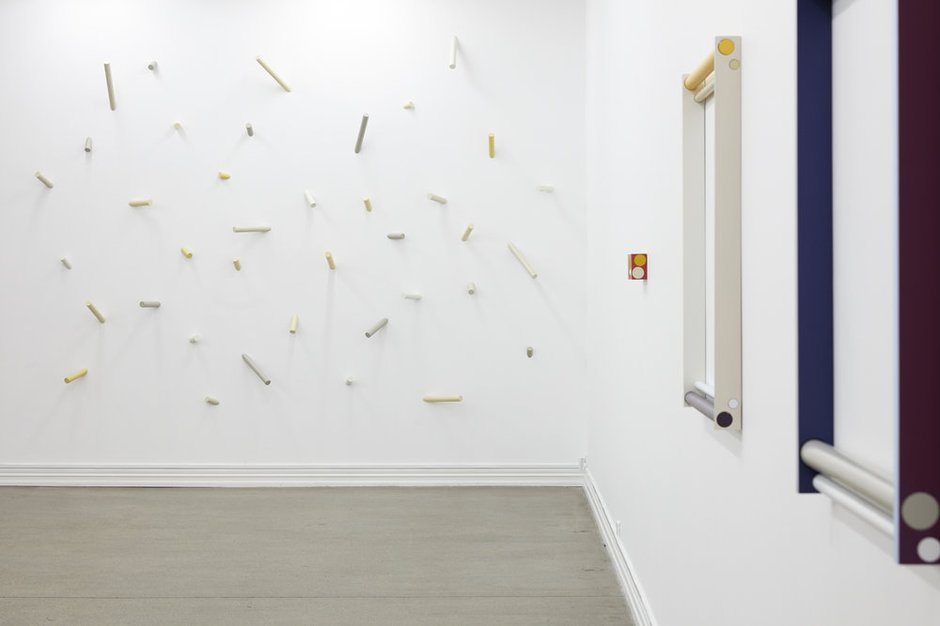
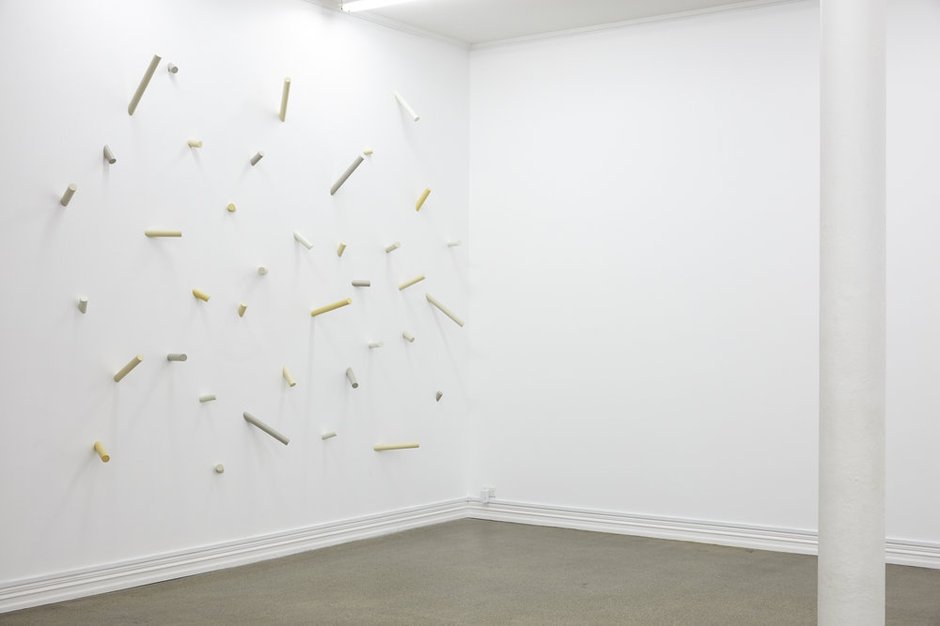
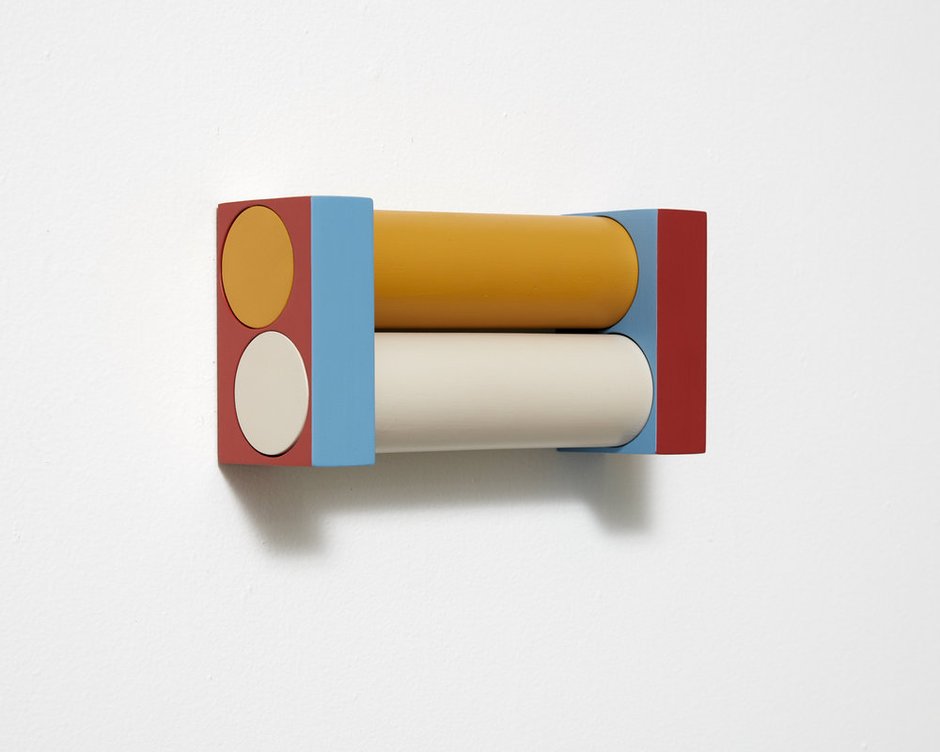
Two works at odds with the main body of the show are an untitled wall installation of pastel coloured cylinders of different lengths projecting out at oblique angles, and the extremely compact Bloom #1 with two identically sized, short cylinders smartly stacked, one above the other. The first looks like a variety of indoors climbing wall, or maybe twisting cilia poking out through some sort of epidermis; the second a variety of toddler’s toy for encouraging hand and eye coordination.
I find this last one, Bloom #1, particularly mesmerising. Domestic in size, and graspable by hand, the curved horizontal planes are compressed within the short flat verticals: both forms crisply articulated by colour. It is such a surprise after the expansive Horizontal Loops, for the latter seem to be able to keep opening out with their sides drifting apart, increasing the space enclosed. Bloom #1 on the other hand is condensed and tight. Nuggety, solid and irreducible.
John Hurrell
 Advertising in this column
 Two Rooms presents a program of residencies and projects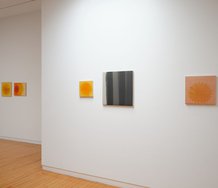
This Discussion has 0 comments.
Comment
Participate
Register to Participate.
Sign in
Sign in to an existing account.