
Peter Dornauf – 21 June, 2026
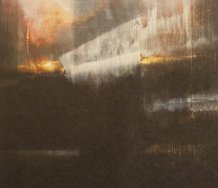
This is an intimate engagement with the body of the glacier that involves large sheets of silk that are first soaked in cynotype solution and then placed directly over the ice in crevices and caves, a kind of embrace that in stains takes up the forms of the frozen water. After exposure to sunlight, the fabric is oxidized and fixed. The result: a kind of electric blue, abstract ‘painting.'
When art meets science interesting things can happen. It happened some time ago when a group of New Zealand poets had a conversation with a group of scientists, and the outcome of that congress was the publication of a volume of poetry the title of which was: ARE ANGELS OK?
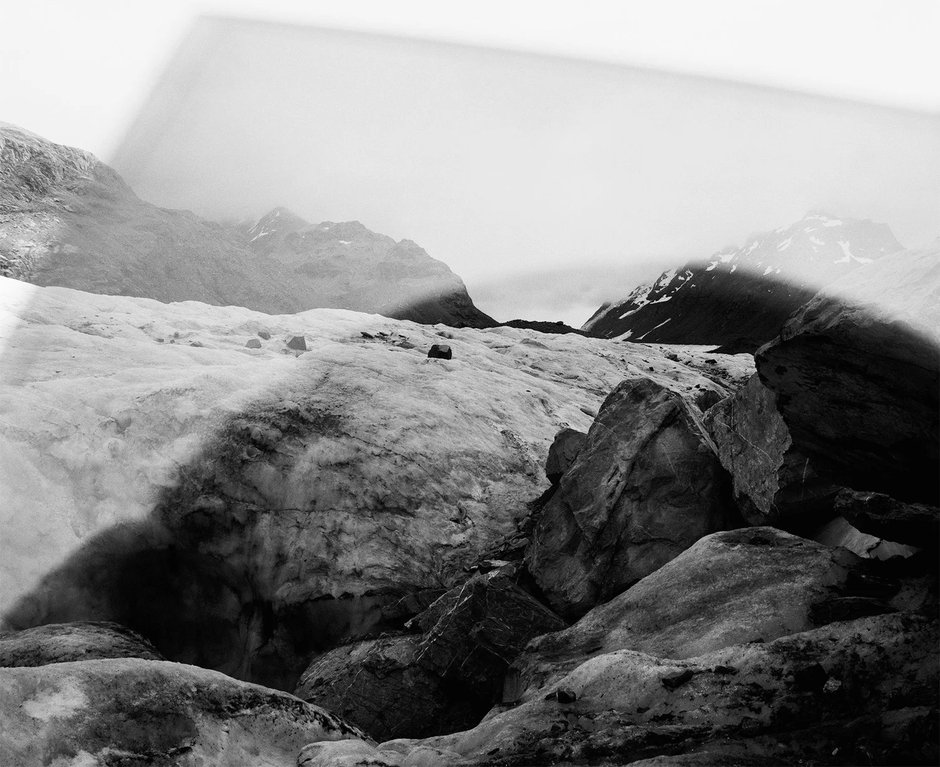
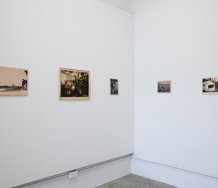
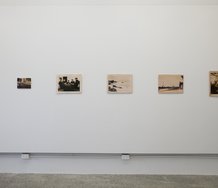
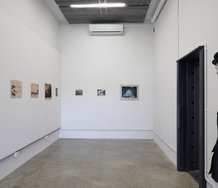
There are no direct references to angels in the current show at RAMP Gallery, WINTEC, which is called COLD LISTENING, but there is a lot of whiteness and blueness, and also a digital book called Of Ice and Thought, which is replete with esoteric scientific equations. This, and other displays of photograms on silk, and glass plate projections printed on paper, is the work of Jonathan Kay, whose focus for the last few years has been to document, observe, and record the Huapapa / Tasman Glacier.
Glaciers have often been characterized as the canary in the coalmine, a measure of how we are doing how things are going, and an early warning system in regard to the nature of our ecology, especially climate and its dramatic changes as monitored by scientists all over the globe. We are in trouble, stuff is melting. We’ve all seen images of polar bears looking disoriented and bewildered.
Kay’s approach is not just to capture images of things from a distance. There works are not pictures of distressed beasts, nor those ubiquitous before-and-after shots that capture a calamity. Rather the artist goes close up. This is an intimate engagement with the body of the glacier that involves large sheets of silk that are first soaked in cynotype solution and then placed directly over the ice in crevices and caves, a kind of embrace that in stains takes up the forms of the frozen water. After exposure to sunlight, the fabric is oxidized and fixed. The result: a kind of electric blue, abstract ‘painting.’
As an interesting point of comparison, a similar method is used by another artist, Amanda Watson, to create landscape-like abstractions, employing both random forms picked directly from the ground, or foliage, and controlled notations applied later.
Kay on the other hand, takes the fluid silk stains, ‘x-rays’ them and then in close-up enlargement, presents the black and white blurred photographs on paper as another method of witnessing the leaking bones of the ice. It is almost a medical examination, for he presents on small plates of glass, sandblasted lists of words constructed like liturgical poems to conjure up processes and ideas associated with the phenomenon he is encountering (transience, loss, change, speed, movement, surface, distance). Such terms subtly delineate the alarming nature of this neoconceptual work.
Then from intimate analysis, he pulls back, and using a HD digital pinhole video, he films from a distance with blurred focus, hovering helicopters and disembarking tourists arriving on the glacier, complete with a heartbeat soundtrack from Angus Woodhams. We are like curious onlookers, exploring the last gasp of this diminishing magnificent creature, which was in Julius von Haast’s time, a spectacle that stretched for more than fifteen miles up the valley.
This reduced icy envoy, once an angelic presence, is now a harbinger of judgement for the modern sins of humankind. Kay has effectively employed his media in new ways to deliver a polemic about one of the pressing issues of our time.
Peter Dornauf
 Two Rooms presents a program of residencies and projects
 Advertising in this column

This Discussion has 0 comments.
Comment
Participate
Register to Participate.
Sign in
Sign in to an existing account.